
Wooden Hotel Key Cards: Pros, Cons, Cost and Alternatives
What a wooden RFID key card is, how it compares with PVC, paper and bamboo on durability, water, print and cost, plus 7 checks before you order.
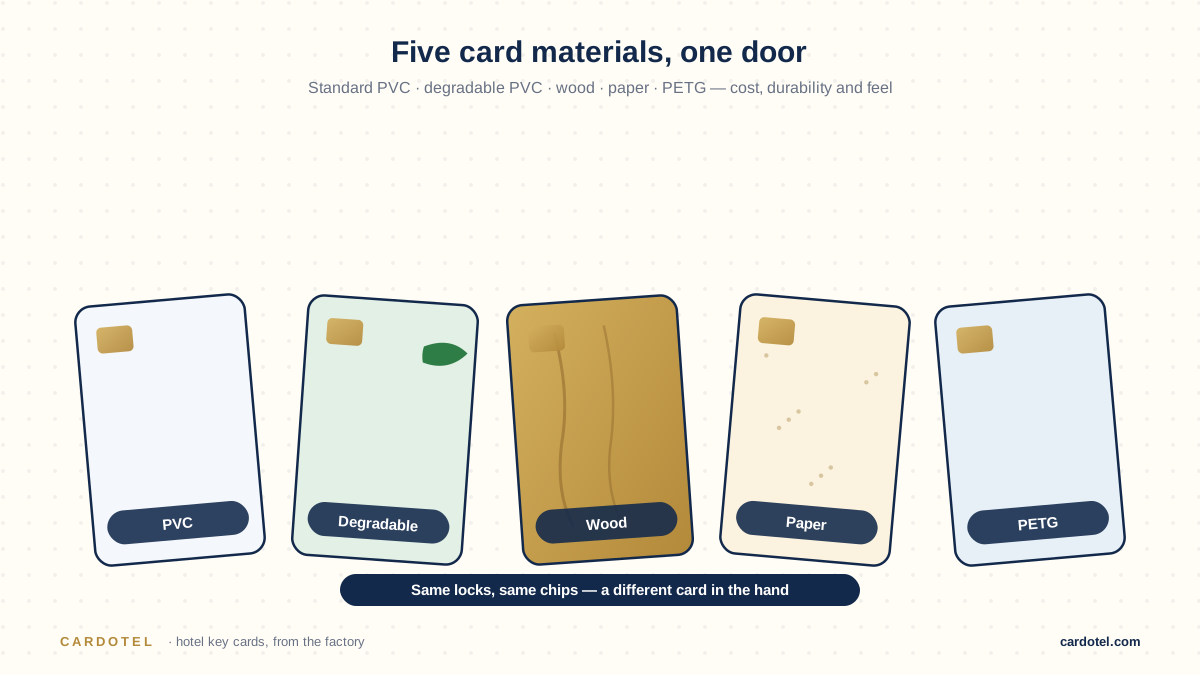
Standard PVC is the baseline for most hotel key card programs: the lowest cost tier, a familiar laminated construction and reuse across many stays. Waterproof paper sits close to PVC on price and suits cards issued once per stay. Wood and bamboo cost more per piece and suit premium or keepsake programs. Degradable PVC needs formulation-specific evidence. PETG is the option for a PVC-free brief. Choose by cost tier, expected reuse, feel, lock fit and end of life, then confirm with test samples in your own locks.
Compare the whole card construction, not just the surface material. The chip, antenna, inlay, thickness and credential preparation all affect performance in the installed system, and material choices also change handling, printing and the evidence needed for any environmental claim.
Cost tiers are relative to a standard PVC card with the same chip, print and quantity; indicative factory-direct ranges are published in the hotel key card cost guide. Lifespan and lock fit must be measured on the proposed construction, because one material name can cover very different layer stacks.
| Material | Cost per card tier | Typical lifespan and use pattern | Feel | Lock fit | End of life and evidence |
|---|---|---|---|---|---|
| Standard PVC | Baseline | Reused across many stays; measure print wear | Glossy or matte plastic, wipeable | Standard laminated ID-1 stack; easiest match to an existing program | Composition sheet and local disposal route |
| Degradable PVC | Modest premium | Test the exact formulation for the planned reuse cycle | Same as PVC | Same stack as PVC; confirm the grade encodes and reads | Construction-specific test report; no assumed landfill outcome |
| Waterproof paper (wood-free) | Close to PVC | Issued once per stay, usually not returned | Soft matte paper surface | Thinner inlay carrier; test moisture exposure and edge wear | Fiber and polymer content; check local paper-stream acceptance |
| Bamboo | Moderate premium | Reuse subject to sample performance | Warm grain, tactile | Test moisture response and dimensional stability | Sourcing, adhesive and finish documentation |
| Real wood veneer | Higher per piece | Test for reuse or budget as a keepsake | Distinctive natural grain | Test moisture response and encoder fit | Sourcing claim matched to transaction documents |
| PETG | Above PVC, grade-dependent | Long-life membership, spa and wet-area credentials | Similar to PVC | Same stack as PVC; confirm flex, wear and temperature | PVC-free claim checked across every layer |
These comparisons are buyer planning considerations, not Cardotel prices or supplier offers.
Shortlist by your dominant priority, then confirm with samples.
| Priority or property type | Material to shortlist | What to verify before ordering |
|---|---|---|
| Lowest cost per card on a reuse program (city and business hotels) | Standard PVC | Dated quote for the current specification; measured return and failure rates |
| Cards issued once per stay and not returned (resorts, short-stay, events) | Waterproof paper (wood-free) | Full composition, moisture resistance under intended conditions, quote against PVC |
| Premium or keepsake touchpoint (boutique, luxury, VIP tiers); warmer look at mid volume | Real wood veneer, or bamboo for mid-volume programs | Species, finish, moisture limits, encoder fit, replacement cost for cards guests keep |
| Evaluating an alternative PVC formulation | Degradable PVC | Original finished-construction test report; print, durability and lock performance on samples |
| PVC-free brief, spa or wet areas, long-life staff cards | PETG | Grade data sheet, every layer and adhesive, flex and heat behavior |
| Plastic-reduction claim in a sustainability report | Wood or paper, with a composition comparison | Polymer content of both complete cards, including coatings and inlay |
PVC hotel key card materials provide the baseline for comparing printed card constructions. PVC sheets are printed and laminated around an RFID inlay; the surface is easy to wipe, while wear, heat tolerance and print durability depend on the grade, overlay and use conditions. Specify the layers, thickness, finish and chip or stripe requirements, then compare price and wear with alternatives on the same order basis. Measure reuse life in your conditions rather than assuming a number of stays.
Degradable PVC is PVC containing degradation additives. Handling, printing and lock performance are usually close to standard PVC, but confirm them on the exact formulation. For any degradability claim, review the original report: tested specimen, method, exposure conditions and measured result for the proposed construction. ASTM D3826 concerns a tensile brittleness endpoint for polyethylene and polypropylene films, and ASTM D5208 concerns UV exposure of photodegradable plastics; references to either do not establish landfill biodegradation or compostability of a finished key card. The relevant evidence is a finished-construction sample tested to ASTM D5511 under simulated landfill conditions, and even that report describes a laboratory digester, not your local landfill. Never infer an end-of-life outcome from a standard number or additive name.
Wooden key card constructions use veneer species such as birch, cherry, sapele or walnut, or bamboo, around a core and RFID inlay. Grain and shade vary naturally, so approve a physical sample before printing or engraving, and confirm species, layers, adhesive, finish and moisture limits. If certified sourcing is required, check the supplier's current certificate scope and the claim on the transaction documents; FSC labels apply to a product and transaction, not to a supplier in general. See wooden key card pros and cons for service life and moisture behavior.
The paper key card material guide covers the layers to confirm: fiber, polymer coatings, laminates, adhesive and RFID inlay. "Wood-free" describes a papermaking category (chemically pulped fiber), not a tree-free origin, and "waterproof paper" does not by itself establish a plastic-free or recyclable finished card. Water-resistant is not the same as suitable for soaking, so define the exposure to test. Paper suits programs that issue one card per stay and prioritize print and low weight.
PETG card material is a copolyester and the usual option for a PVC-free brief. The polymer contains no chlorine in its backbone, but that does not certify every overlay, adhesive or the inlay, so confirm all layers before making the claim. Heat resistance and flex vary by grade and processing; a PETG label alone does not establish superior durability or food-contact suitability.
For leather-wrapped, ABS, polycarbonate or bio-based alternatives, ask for the complete layer and core specification and use limits; a surface description does not identify the core polymer or disposal route. See the materials index.
Unit price alone misses how differently each material is used. A card reissued only when it wears out must survive years of circulation; a card handed over for a five-night stay does not. Cost per guest-stay, meaning unit price divided by the stays a card serves before replacement, is the more useful number and it changes the ranking: paper can be the lowest per stay in a single-issue program even though PVC is the lowest per card. A wooden card kept as a souvenir still creates replacement demand for the next guest, so budget it as a keepsake unless measured return rates say otherwise.
Four inputs drive the final price regardless of material:
The lock reads the chip through the antenna, not the card body, so a material change is often possible without replacing locks, provided the exact chip, credential configuration, antenna performance and finished dimensions suit the installed system. Wood, paper and PETG bodies change the inlay carrier and sometimes the thickness, which can shift read range and encoder feed: ISO/IEC 7810 ID-1 cards measure 85.60 by 53.98 mm at a nominal 0.76 mm, and a thicker wooden or thinner paper card may read at the door yet misfeed in a desk encoder.
Chip families such as MIFARE Classic 1K and Ultralight C are commonly used in hotel locks from Saflok, Onity, VingCard and Salto, and the same chip can be built into any of the five materials. Confirm the lock model, encoder and software requirements, then request test samples in the shortlisted materials with your actual chip and run them on the property's authorized encoder and doors before approving an order. The key card troubleshooting guide covers samples that fail to encode or read.
The label "eco-friendly" has no fixed legal definition, so describe the property instead of repeating the label. Assess the complete card, including chip, antenna, coatings, laminates and adhesives, and request product-specific composition and test evidence first. Confirm collection and processing with the local waste operator.
| Claim you want to make | What supports it | What does not |
|---|---|---|
| Lower plastic content than our current card | A composition comparison of both complete cards, including coatings, adhesive and inlay | A paper or wood surface on its own |
| Certified wood sourcing | Current certificate scope plus the claim on this order's invoice or delivery documents | A supplier's general statement that it holds a certificate |
| Tested for degradation | A finished-construction report tested to ASTM D5511 under simulated landfill conditions, with duration and measured result | D3826 or D5208 references, or an additive brand name |
| Recyclable locally | Written acceptance from the waste operator for the complete card | A material name or a recycling symbol on the resin |
| PVC-free | Layer-by-layer confirmation for core, overlay, adhesive and inlay | A PETG core alone |
Avoid "compostable" or "100% biodegradable" wording for any of these cards; make only claims supported by current documents that apply to the actual product and transaction. For PVC at end of life, see can PVC key cards be recycled.
Wood, bamboo and paper cards replace the PVC core and overlays with fiber or veneer, so polymer content is usually limited to the inlay carrier, adhesives and any coating: a measurable reduction against PVC, provided you compare full constructions rather than surfaces. Degradable PVC and PETG do not reduce plastic content; they change the polymer or its additives, which is a different property.
A card with visible wood grain or a soft matte paper finish reads differently in a guest's hand than glossy plastic, and check-in is one of the few moments guests are paying attention; for boutique and independent properties, that tactile detail is an inexpensive point of differentiation. Most properties do not pick one material exclusively. A common approach pairs eco key cards for suites, VIP guests or one wing with standard cards for high-turnover rooms, then expands the share on later reorders as measured cost and guest response confirm it; this is the lowest-risk way to test.
Key cards are a small share of a hotel's total footprint. Energy use is typically the largest lever, followed by water, and those fixes (LED lighting, occupancy sensors, low-flow fixtures) need capital and planning. A key card material change happens at the next reorder cycle with no renovation budget, and every guest handles the result at check-in. That mix of low effort and high visibility is why key cards, linens and amenity dispensers are usually first on a property's list, even though they are rarely the biggest environmental gain.
Visibility cuts both ways. A card printed with the word "eco" and no disclosed material reads as a marketing gesture; a disclosed construction with documented sourcing or composition is defensible to guests, press and corporate travel buyers. Treat the card as one entry in an owned program: a named person tracking progress, sustainable options as the default (opt-out rather than opt-in) and staff trained on why a practice exists.
Procurement matters too. For card orders, weigh fewer consolidated shipments against storage, artwork changes, actual consumption and obsolete stock; a larger order or a different material does not automatically lower total cost or environmental impact.
If PVC is your comparison baseline, request a PVC hotel key card quote with the chip or stripe specification, quantity per design and destination, and ask for shortlisted alternatives on the same basis. To feel the difference first, request material samples encoded for your lock system.
What a wooden RFID key card is, how it compares with PVC, paper and bamboo on durability, water, print and cost, plus 7 checks before you order.
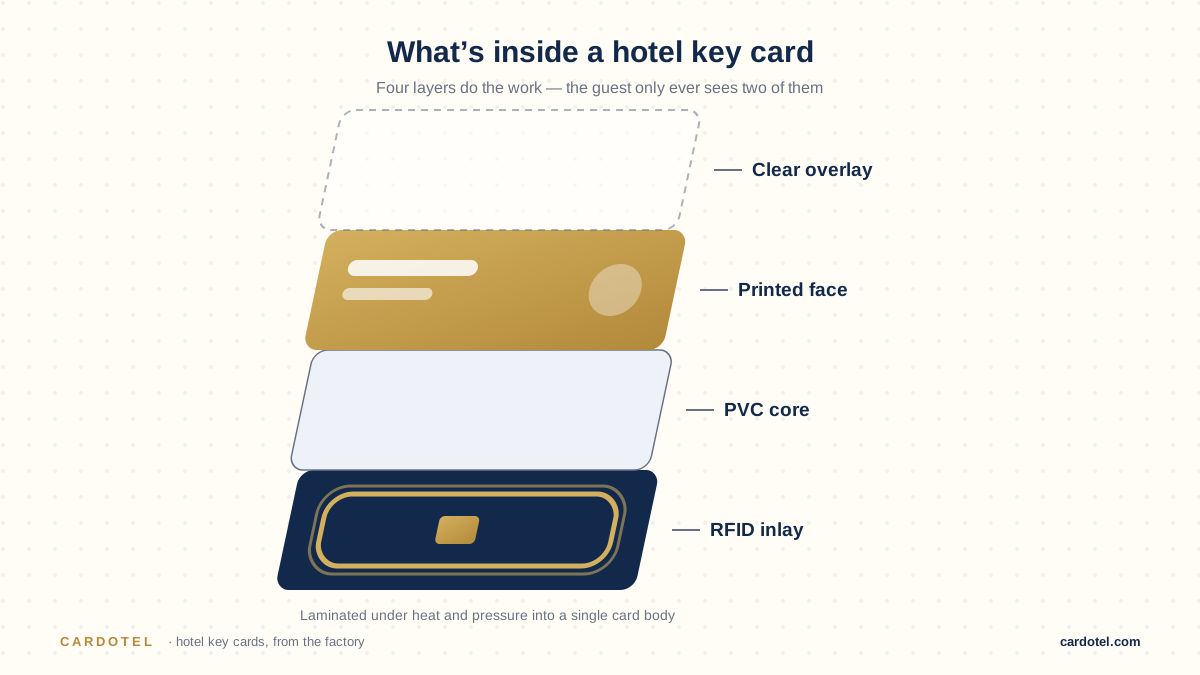
PVC, wood, and waterproof paper each build hotel key cards differently. See how each material is constructed and which one fits your property's brand.
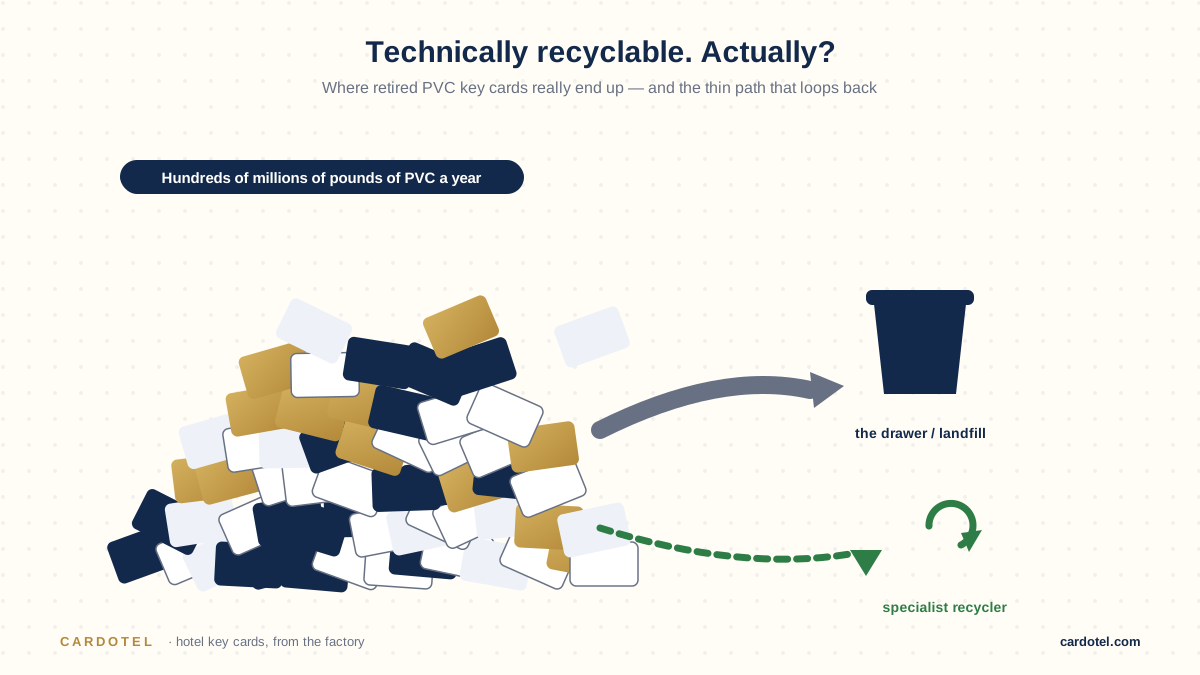
PVC key cards are technically recyclable, but almost none get recycled in practice. Here's which card materials actually can be, and why RFID complicates it.