
Hotel Key Cards
RFID and magstripe cards for your hotel’s installed access system.
Hotels
The quiet workhorse of your front desk
Most hotels run two card populations: guest keys that leave with the luggage, and staff cards that live on lanyards for years. Plan the two separately and the card program gets cheaper and calmer.
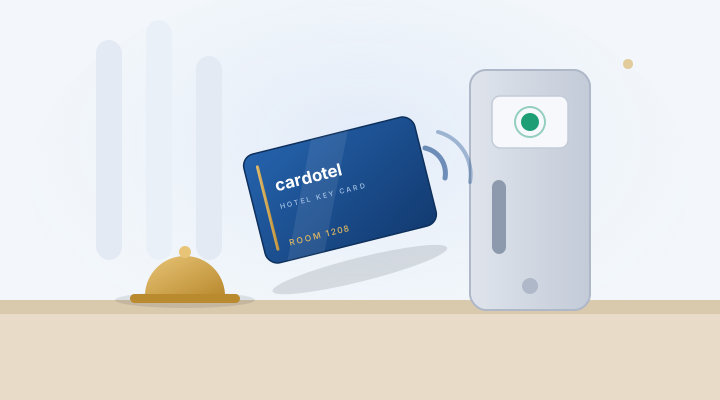
Select a product to review its options, request a quotation or plan the samples your team needs before ordering.
RFID and magstripe cards for your hotel’s installed access system.
Wood, bamboo and paper options, with composition and sourcing evidence to review.
Custom-printed key card sleeves, key fobs, staff ID cards and linen tags that complete the program.
Sample contents and charges, production timing and shipping are confirmed for your project.
Prepare your project brief
Keep guest cards, staff cards and each property’s requirements distinct when preparing a group or single-hotel quotation.
Use the reorder form to share your previous order reference, new quantities and any changes.
A city, business or chain hotel typically needs three things from a key card supplier: cards that match the installed lock system exactly, printing that holds up next to the brand manual, and a reorder rhythm that keeps every front desk stocked. Start from the locks — the lock compatibility hub covers Saflok, Onity, Salto, VingCard, Kaba and other common systems — then decide artwork and quantities.
Guest and staff cards age differently. A guest card is issued, pocketed and often never comes back; a staff card is presented dozens of times a day for years. Many hotels therefore print guest cards on standard PVC and give staff cards a more durable construction, a photo ID layout or a slot punch for lanyards. Unsure which chip your locks read? The chip identification guide shows how to check a working card.
Tap-to-open guest cards made to the chip specification your locks and encoder require, printed to your artwork.
For swipe or insert readers: HiCo or LoCo stock, stripe position and track layout matched to the existing encoder and current card.
WiFi codes, breakfast hours and a writable room-number panel — printed in matched PMS colors alongside your cards.
Durable staff cards with photo ID layouts, slot punching and lanyard options; issuing permissions stays inside your access system.
Cards are quoted from your lock model, encoder and software details, not from a brand-name guess.
PMS color matching and premium finishes hold up next to your signage and collateral, not just next to other cards.
State the arrival date you need in the inquiry; sample, production and transit are confirmed as separate dates in the quote.
Guest keys disappear at a rate every front desk knows and few budgets plan for — checked out in a hurry, or kept as souvenirs. Reorders based on your own records beat guesses; the guide on how many key cards a hotel needs walks through an estimate from occupancy, party size and reissue habits.
Printed key card sleeves do quiet work at check-in: the WiFi code, breakfast hours and a writable room-number panel answer the three questions guests otherwise ask at the desk. Ordering sleeves and cards together keeps colors matched on press and quantities in sync.
Groups with mixed lock estates can still consolidate purchasing: keep a per-property spec sheet — lock brand and model, encoder, chip or stripe, artwork version — and have orders packed per site. The choice between RFID and magstripe cards affects cost and handling, so budget each property against the key card cost guide rather than one blended figure.
Before a first order or a supplier switch, confirm the lock model, encoder and access software, and test a sample card in your own encoder and doors — a lock brand or chip family name alone does not establish compatibility.
Yes — that is normal for groups. Send the lock and card details for each site once; after that, group procurement gets one invoice and every front desk receives cards that match its own doors.
Track how many cards you issue and how many come back over a typical month, then hold several reorder cycles of buffer. Occupancy, average party size and your reissue policy drive the number more than room count does. Read the quantity planning guide
Magnetic stripe cards — especially LoCo stripes — can be corrupted by contact with magnets, and phone cases and bag clasps are the usual culprits. RFID cards have no stripe to corrupt, so if demagnetized keys dominate your reissues, that is one practical argument for moving to RFID. Compare RFID and magstripe
Start your order
Share the installed lock and encoder details, quantity per design, artwork and destination. Confirm the credential and sample checks before production.