
Hotel Key Card Materials Compared: PVC, Wood, Paper, PETG
Compare 5 hotel key card materials (PVC, degradable PVC, wood, paper, PETG) on cost tier, lifespan, feel, lock fit and end of life, with tables.
Material claims: Assess the complete card, including the chip, antenna, coatings, laminates and adhesives. Request product-specific composition and test evidence before making an environmental claim. Confirm collection and processing with the local waste operator; a material name does not establish recyclability or compostability.
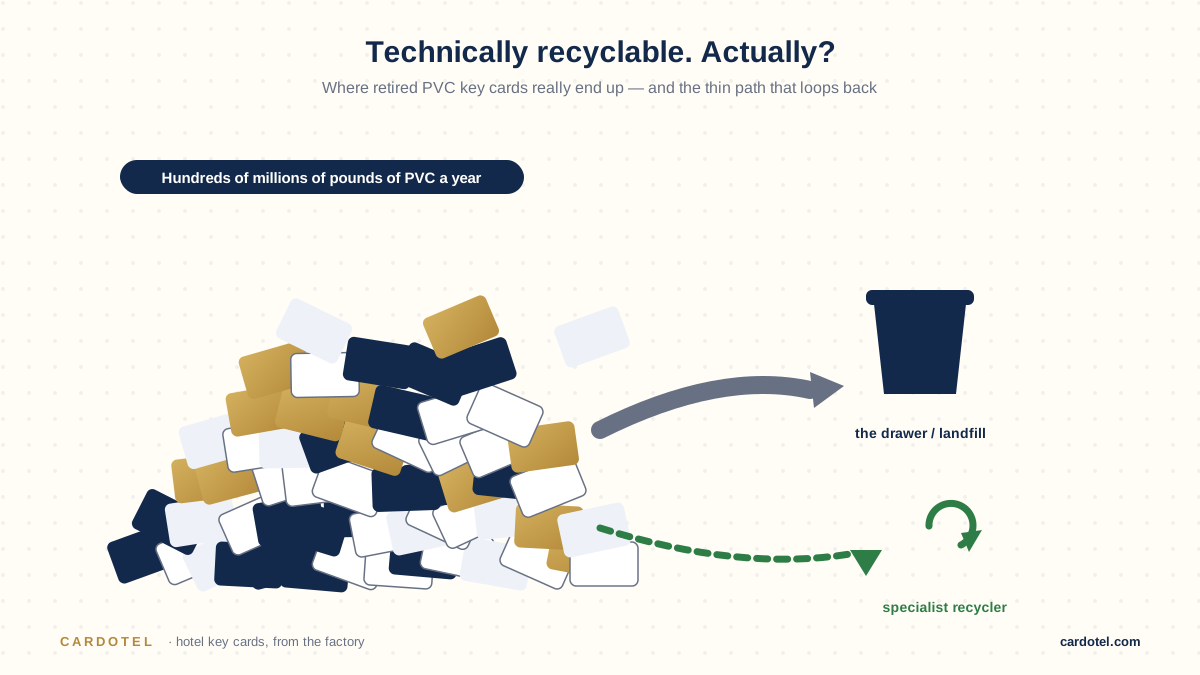
Every hotel that reissues key cards eventually asks the same question: what happens to the ones piling up in a drawer at the front desk? PVC is technically a recyclable plastic, but "technically recyclable" and "actually gets recycled" are two very different things once you're talking about a laminated, chip-embedded hotel key card.
Cards discarded worldwide each year run into the hundreds of millions of pounds of PVC, most of which never reaches a recycling facility. The reasons are mundane rather than dramatic: cost, consumer confusion, and the fact that almost every plastic card looks identical regardless of what's actually inside it.
Here is a realistic look at which cards can be recycled, which cannot, and what a hotel or supplier can actually do about it.
Standard municipal recycling programs aren't set up to sort cards. They're too small for optical sorting equipment, too similar-looking to separate by hand, and too varied in composition — a "PVC" card might contain a magnetic stripe, an RFID inlay, foil printing, or a laminate layer that a recycling facility can't process economically. Most cards that go into a household recycling bin get pulled out during sorting and landfilled anyway.
| Construction | What to confirm before collection |
|---|---|
| PVC or recycled-content PVC | Accepted polymer, recycled-content evidence and complete-card collection rules |
| PETG | Local acceptance of PETG cards; do not assume acceptance with PET packaging |
| Wood without electronics | Treatment, coatings, adhesives and the operator’s acceptance rules |
| RFID cards | Whether embedded electronics require a specialist route |
| Laminated paper | Whether the full fiber/coating/adhesive structure is accepted |
This is the sticking point for most hotels: the majority of modern hotel key cards are RFID, not plain magstripe or blank PVC. Every RFID card has a chip and a wire or etched antenna embedded inside the plastic layers. Recycling facilities can't easily strip that hardware out, and if it goes through mechanical recycling equipment anyway, it contaminates the batch and can damage the machinery. That's why RFID access cards, whether PVC or wood-bodied, are among the least recyclable cards in circulation today, even when the outer material is otherwise eco-friendly.
Card-specific recycling programs have existed in the past — mail-back schemes and specialty processors that shredded old gift cards and hotel keys into polymer sheet for reuse — but several of these have scaled back or shut down over the years as card technology changed and RFID components made incoming material harder to process economically. In practice, most hotels don't have a viable recycling path for spent key cards, which is exactly why more properties are rethinking the material itself rather than the disposal process.
Reissuing a card that still meets the property’s read and print requirements can reduce replacement demand. For a material change, compare expected service life and the local collection route; wood, paper-based or alternative PVC cards still require construction-specific disposal guidance.
Planning an order? Contact Cardotel with your lock and encoder details, required card or wristband specification, quantity per design and destination. Request a project quote and confirm sample availability, charges, preparation and shipping.
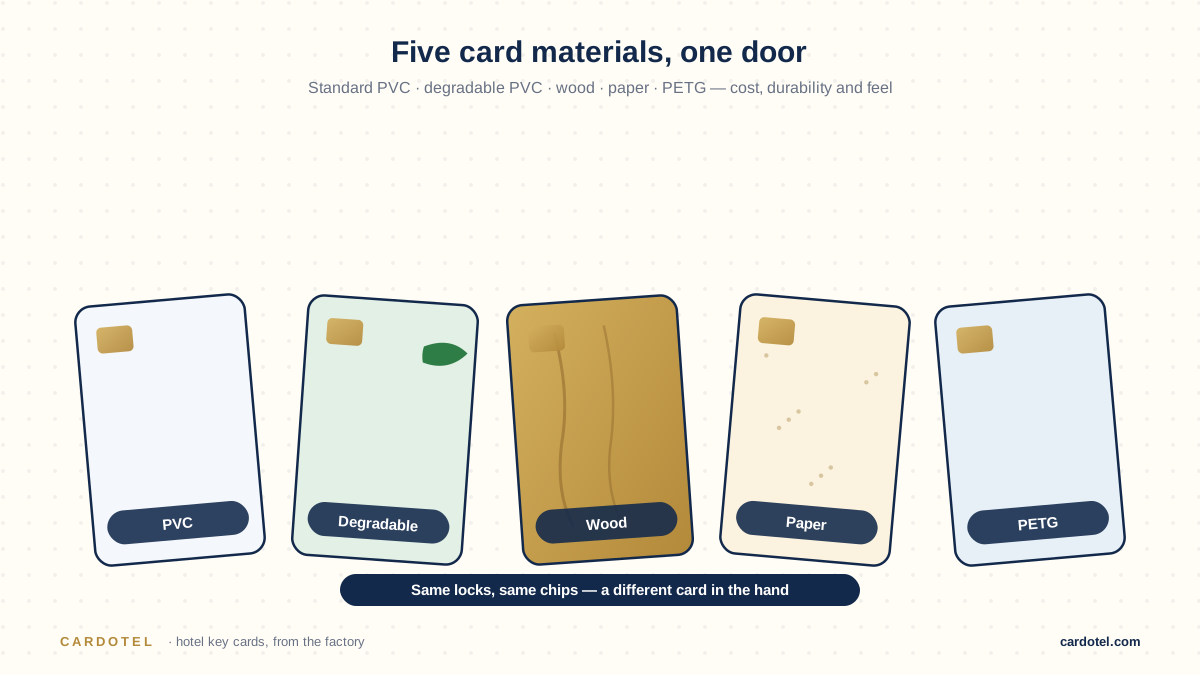
Compare 5 hotel key card materials (PVC, degradable PVC, wood, paper, PETG) on cost tier, lifespan, feel, lock fit and end of life, with tables.

What a wooden RFID key card is, how it compares with PVC, paper and bamboo on durability, water, print and cost, plus 7 checks before you order.

Recycled PVC key cards sound sustainable, but the real story is more nuanced. Here's how PVC recycling actually works and what it means for hotel buyers.
Start your order
Share your lock and encoder details, quantity per design, artwork and destination. Confirm card options, MOQ, sample costs and delivery in your quote.