
RFID in Hospitality: The Complete Guide Beyond Room Keys
A complete guide to RFID in hospitality beyond room keys, covering access control, resort wristbands, inventory tracking, and staff accountability.
Material claims: Assess the complete card, including the chip, antenna, coatings, laminates and adhesives. Request product-specific composition and test evidence before making an environmental claim. Confirm collection and processing with the local waste operator; a material name does not establish recyclability or compostability.
A guest checks out, drops their key card in the box by the elevator, or just leaves it in the room, and moves on with their day. What happens to that card next is a question almost nobody outside hotel operations ever thinks about — but it shapes purchasing decisions, waste output, and sustainability claims for every property that issues cards.
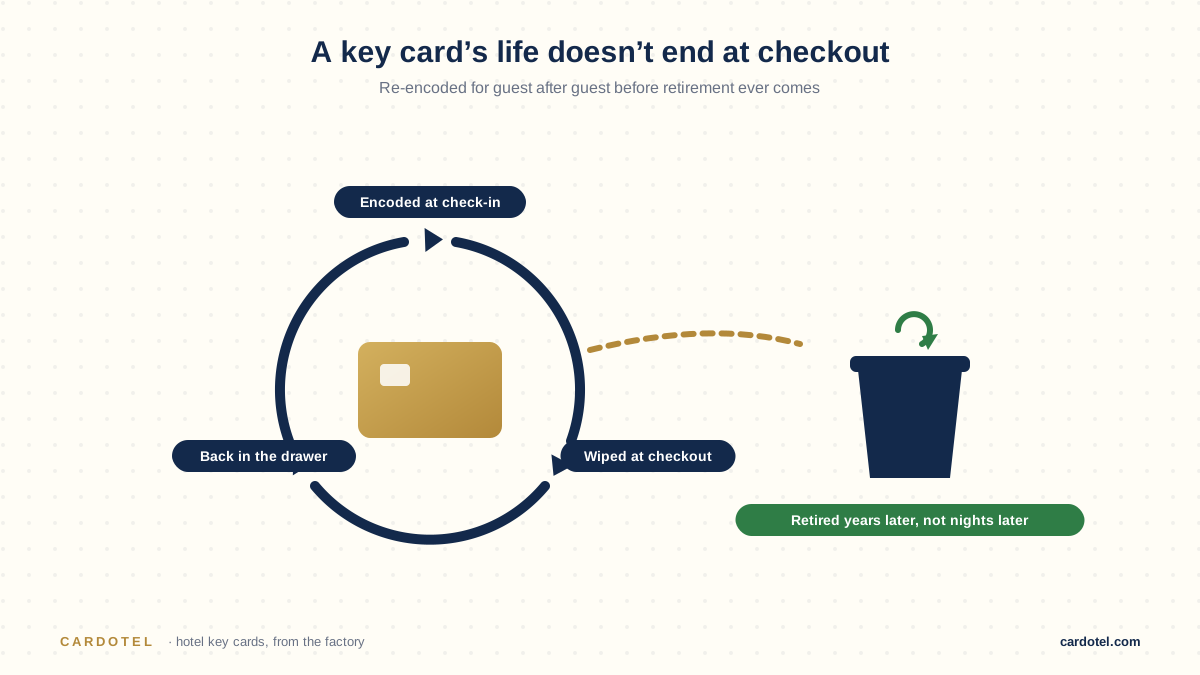
Returned, serviceable cards can be prepared for another guest where the card and issuing system support reuse. The number of reuse cycles is not fixed. Follow the card from return and inspection through reissue or retirement, and check the collection route before making disposal claims.
The front desk uses the installed issuing system to set up the next guest’s credential. The exact data fields and preparation steps depend on that system. A returned hotel key card can be considered for reuse after condition checks and the property’s authorized issuing procedure.
Access ends according to the credential’s programmed validity and the installed cancellation procedure. A checkout action alone does not confirm that every offline lock has received an update. Staff should follow the system provider’s process for returned and unreturned credentials before preparing the next guest’s access.
There is no universal reuse count or service life. Construction, handling, encoding capability and the property’s acceptance checks all matter. RFID avoids stripe-to-head reading contact and magnetic-stripe erasure, but finished RFID cards can still be physically damaged. Record actual failures and retire unreliable cards rather than estimating their remaining life from the card type alone.
Cards get pulled from circulation for a few practical reasons:
The answer depends on the complete construction and the receiving operator’s process. Identify layers, coatings, adhesives and embedded electronics before asking which collection route accepts the finished card.
| Card type | What to verify with the receiving operator |
|---|---|
| Magstripe PVC | Confirm acceptance of the exact PVC, stripe, overlay and adhesive construction. |
| RFID PVC | Disclose the chip, antenna and inlay; ask whether finished cards are accepted and whether separation is required. |
| Laminated paper | Specify the fiber, coatings and laminates; confirm whether those composite cards are accepted. |
| Wood without an RFID inlay | Check treatments and adhesives as well as local acceptance; do not assume recycling or composting eligibility. |
| RFID wood | Include the finish, adhesive and complete inlay in the composition details; do not treat the whole card as bare wood. |
The EPA’s recycling guidance explains that local acceptance varies and a resin identification symbol does not necessarily mean an item is collected for recycling. This is general guidance, not evidence about a particular key card. Obtain the receiving operator’s instructions before putting retired cards in a recycling or composting collection.
Manage reuse, purchasing and collection together. Choose actions from your property’s records rather than assuming one end-of-life route applies everywhere:
Track return, reuse and retirement rates to see whether these changes reduce purchases and waste at your property. A change of material or a collection box alone does not establish an environmental benefit.
Planning an order? Contact Cardotel with your lock and encoder details, required card or wristband specification, quantity per design and destination. Request a project quote and confirm sample availability, charges, preparation and shipping.

A complete guide to RFID in hospitality beyond room keys, covering access control, resort wristbands, inventory tracking, and staff accountability.
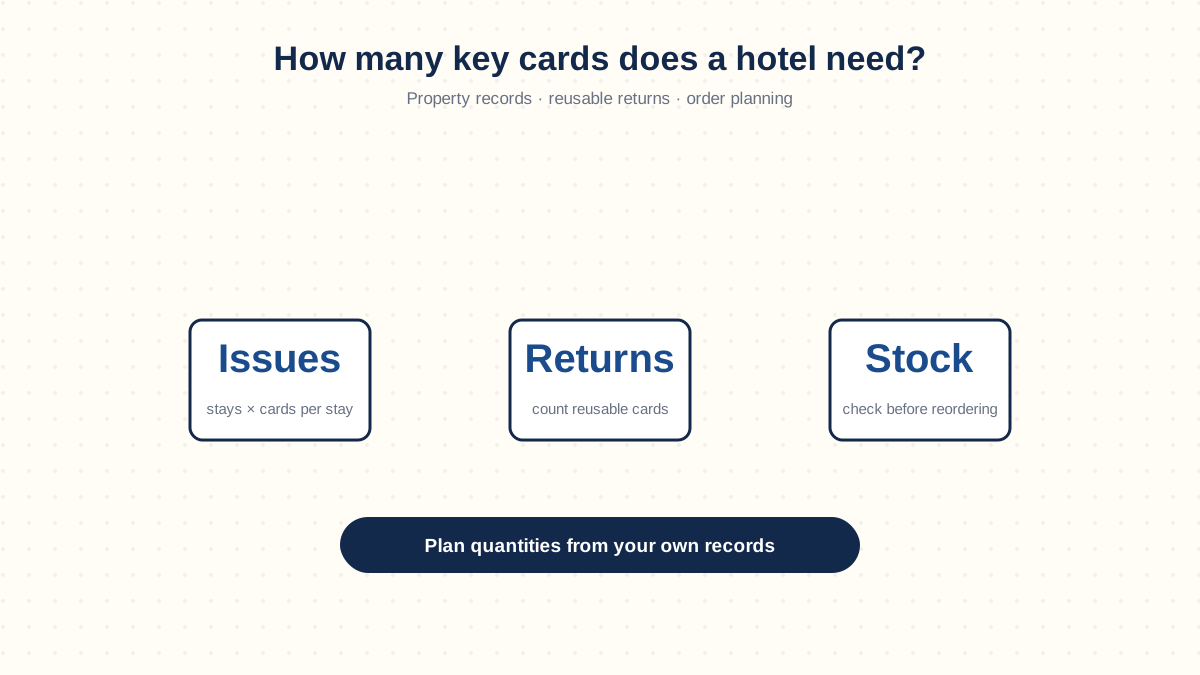
Estimate hotel key card replacements from stays and reusable returns, then plan order quantities, stock reserves and reorder timing with worked examples.

A practical guide to hotel key cards covering chip types, lock brand compatibility, eco-friendly materials, printing, and costs before you order.
Start your order
Share your lock and encoder details, quantity per design, artwork and destination. Confirm card options, MOQ, sample costs and delivery in your quote.