
RFID in Hospitality: The Complete Guide Beyond Room Keys
A complete guide to RFID in hospitality beyond room keys, covering access control, resort wristbands, inventory tracking, and staff accountability.
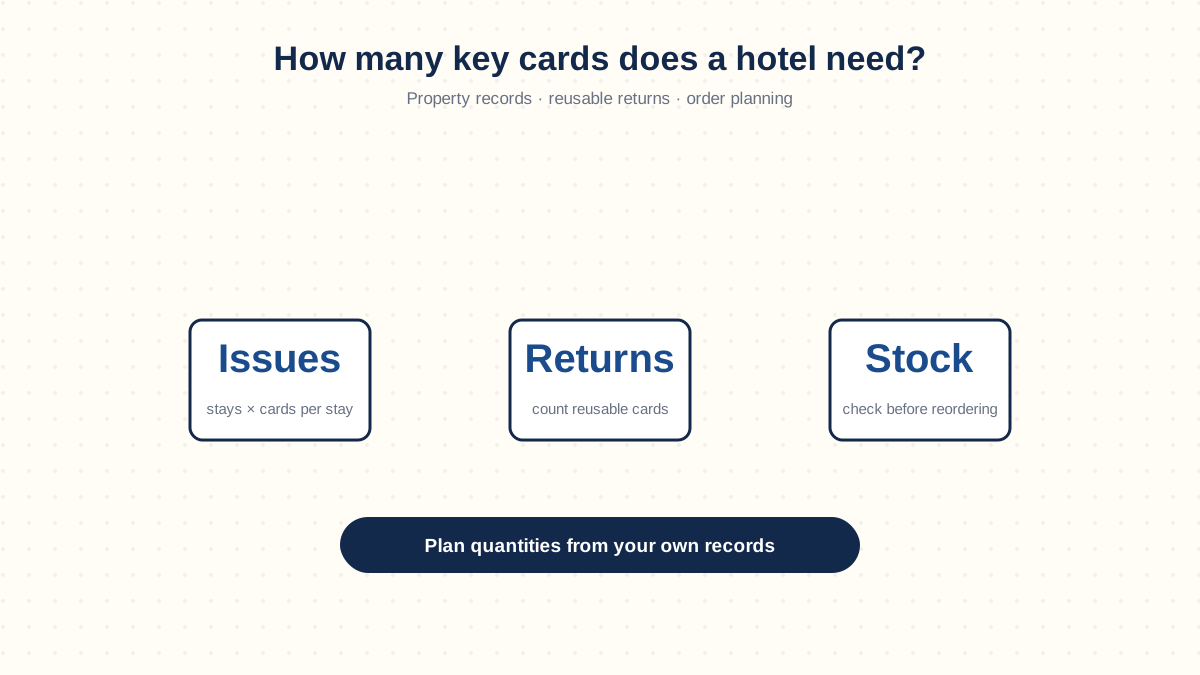
Plan a hotel key card order from stays, reusable returns and available stock. Room count alone cannot tell you how many physical cards to buy: the same card can be issued again after it is returned and accepted for reuse.
The examples below are hypothetical planning calculations, not Cardotel customer results or hotel industry benchmarks. Replace every assumption with your property's records.
Track these figures by month or season if arrivals and returns vary. A new opening, a system migration or a change in card design needs a separate initial stock plan.
Suppose a 200-room hotel is open for 365 days, has 70% occupancy, an average stay of two nights, and issues two cards per occupied room stay. Assume 50% of issued cards return in reusable condition. This return rate is an example, not a recommended target or a typical hotel result.
| Planning step | Illustrative calculation |
|---|---|
| Occupied room nights | 200 × 70% × 365 = 51,100 |
| Occupied room stays | 51,100 ÷ 2 nights = 25,550 stays |
| Card issues | 25,550 × 2 cards = 51,100 issues |
| Recurring replacements | 51,100 × (1 − 50%) = 25,550 cards |
The replacement estimate assumes steady operation and a working return-and-reuse process. It excludes opening stock, staff cards, additional reissues and changes in stock levels. The non-returned or non-reusable share already includes damaged returns; do not add the same damage twice.
This is the same illustrative scenario used in the hotel key card cost guide. It does not mean the hotel should buy its entire annual requirement in one order.
Choose a planning period with dated stock and delivery assumptions. A starting calculation is:
Quantity to order = forecast replacement demand + target closing reserve − unallocated usable stock − confirmed incoming cards available in time.
For an illustrative period, 800 expected replacements + a chosen 200-card closing reserve − 300 usable cards on hand − 100 confirmed incoming cards gives 600 cards. Treat a negative result as zero, then separately assess opening stock or other needs not included in the replacement forecast.
Check timing within the period: a delivery at its end cannot cover a shortage in its first week. Ask for a quote using the calculated need and any alternative quantities you want to compare. Confirm MOQ per design, sample charges, printing, freight and other applicable costs in the written quote.
A reorder trigger combines expected demand during replenishment with a reserve for uncertainty. Compare it with usable stock and relevant planned receipts. This follows the general approach described in the Oracle Inventory planning guide.
Use the replenishment time agreed for your project, including approval, production and transport. Set the reserve from your demand variation and the cost of running short. Neither a universal six-week trigger nor a fixed multiple of the busiest month fits every property.
Compare total delivered cost for the quantities you could actually use. A lower unit price may come with more cash tied up in stock, extra storage or cards made obsolete by artwork and lock-system changes. Price breaks, split deliveries and reorder terms need a dated written offer.
Keep a reference to the agreed card specification and accepted sample. Reconfirm compatibility after changes to readers, software, credential configuration or card construction; a previous order is not proof that a changed setup will work. Use the compatibility checklist and quality and sample checks guide before approving a new batch.
Follow storage and handling instructions for the actual card construction. Do not assume every PVC, paper, wood or bio-based card has the same shelf life or heat tolerance.
Include the quantity calculation, stock on hand, needed-by date, destination, quantity per artwork and the installed lock/encoder details. If the forecast is incomplete, say which inputs are estimates. Confirm sample availability, charges and preparation separately from the production quote.

A complete guide to RFID in hospitality beyond room keys, covering access control, resort wristbands, inventory tracking, and staff accountability.
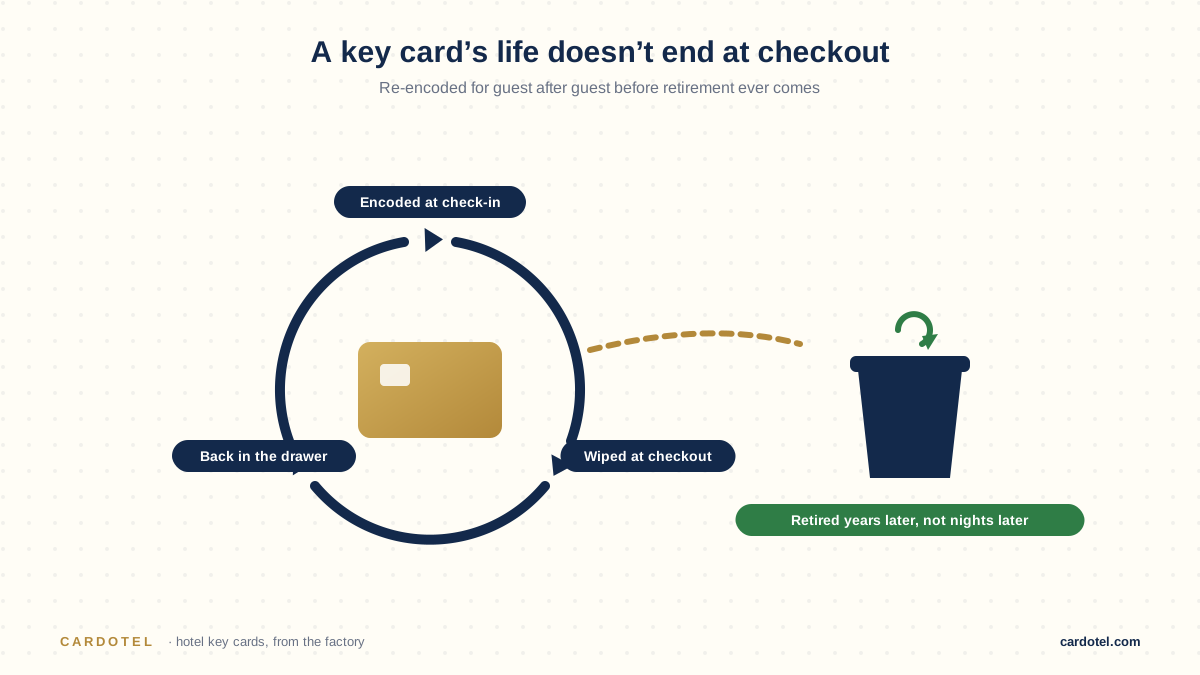
Hotels rarely trash key cards after one stay. Here's the real lifecycle of a hotel key card, from check-in encoding to final retirement and disposal.
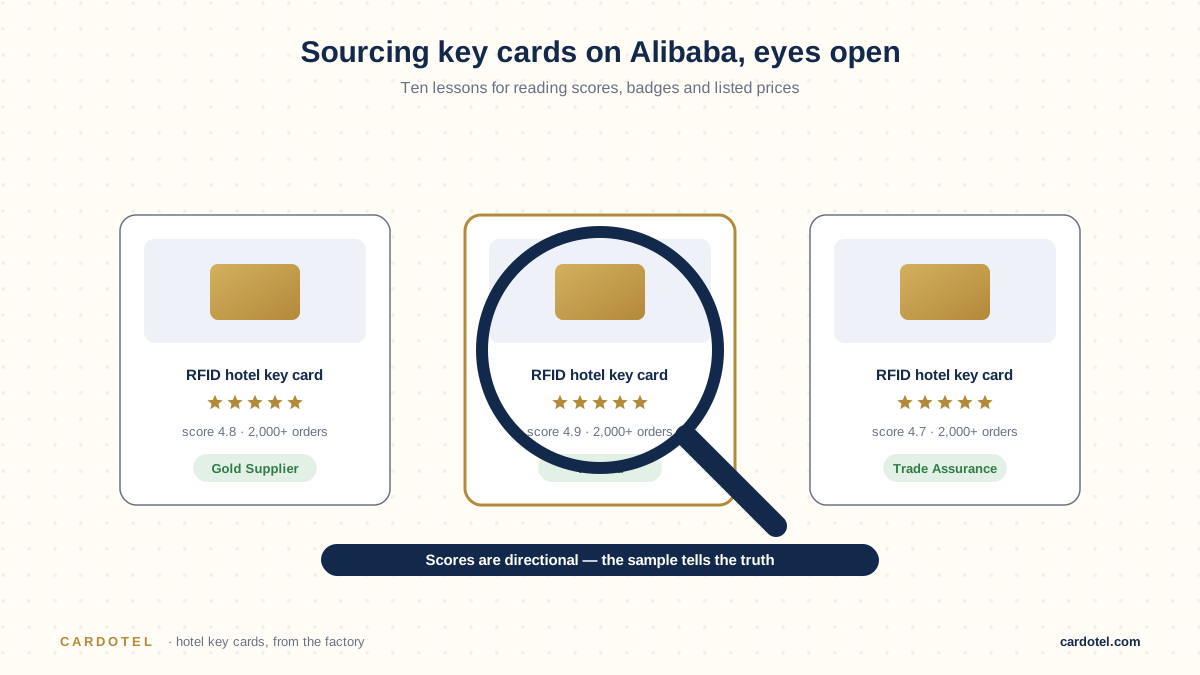
12 supplier questions, a sample-test protocol, a video-tour checklist and importing basics (Incoterms, HS codes) for vetting a key card factory in China.