
Hotel Key Card Materials Compared: PVC, Wood, Paper, PETG
Compare 5 hotel key card materials (PVC, degradable PVC, wood, paper, PETG) on cost tier, lifespan, feel, lock fit and end of life, with tables.

Material claims: Assess the complete card, including the chip, antenna, coatings, laminates and adhesives. Request product-specific composition and test evidence before making an environmental claim. Confirm collection and processing with the local waste operator; a material name does not establish recyclability or compostability.
Hotel procurement teams hear the same pitch constantly: switch to recycled PVC and check the sustainability box. It sounds simple, but recycled PVC is not one material with one footprint — it depends on how the plastic was reprocessed, how many times it has already been through that process, and what happens to it next.
This matters directly for anyone buying hotel key cards, since PVC is still the default substrate for magstripe and RFID cards worldwide. Before a supplier's "eco" claim decides your next order, it helps to understand what recycled PVC actually is, how it's made, and where its environmental case gets weaker.
Below is a practical breakdown of the two recycling routes, the trade-offs each one carries, and how to read a recycled-content claim on a key card quote without getting fooled by marketing language.
PVC — polyvinyl chloride — is a synthetic plastic built from vinyl chloride and a mix of additives (plasticizers, stabilizers, pigments) that give a finished card its flexibility and durability. "Recycled PVC" simply means some or all of the base resin came from reprocessed plastic rather than freshly manufactured resin.
Two things determine how much that claim is worth: how the material was recycled, and how much virgin resin was blended back in to restore performance. A card described as "recycled PVC" might be 20% reclaimed material and 80% virgin resin, or the reverse — and suppliers rarely volunteer the ratio unless asked directly.
Nearly all recycled PVC on the market today comes from one of two processes.
Old PVC products are collected, sorted, cleaned, shredded, melted, and re-formed into new items. It is the cheaper, more established route, and it is what most "recycled PVC" key card stock actually is.
PVC is broken back down into its chemical building blocks, then reassembled into new resin. It produces a cleaner, more consistent output and can be repeated more times without losing quality, but the process is energy-intensive, costly, and still not widely available at industrial scale.
| Factor | Mechanical recycling | Chemical recycling |
|---|---|---|
| Cost | Lower | Higher |
| Output quality | Degrades a little each cycle | Closer to virgin resin |
| Availability | Widely used | Limited, still scaling up |
| Handles contamination well | Not really | Better, but not perfectly |
| Typical use | Pipes, flooring, cards, cable jacketing | Higher-spec plastics, complex or multi-layer waste |
Recycled PVC is not infinitely renewable. Mechanically recycled resin loses some polymer integrity every time it's reprocessed, and industry consensus puts the practical limit at somewhere around six to seven cycles before performance drops too far for demanding applications. Additives like plasticizers are difficult to fully separate out, contamination from mixed waste streams is common, and the recycling infrastructure needed to do this well isn't available everywhere.
None of that makes recycled PVC a bad choice — it makes it a qualified one. It's genuinely better than using 100% virgin PVC for a given batch of cards, but it is not a zero-impact material, and it is not infinitely recyclable itself.
If a supplier quotes "eco-friendly recycled PVC" cards, ask three questions before you sign off:
Compare recycled PVC, alternative PVC formulations, wood and paper-based cards using documented recycled content, the complete construction, expected reuse and local waste acceptance. None automatically avoids the end-of-life processing issues created by coatings, adhesives and embedded electronics.
Planning an order? Contact Cardotel with your lock and encoder details, required card or wristband specification, quantity per design and destination. Request a project quote and confirm sample availability, charges, preparation and shipping.
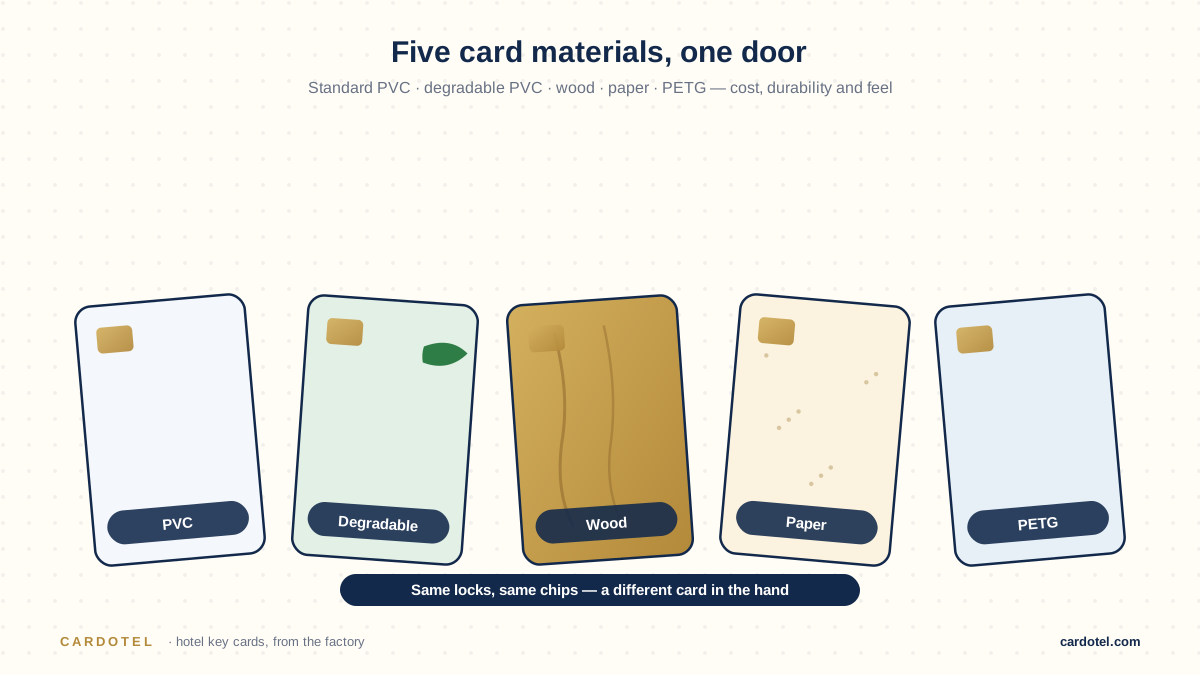
Compare 5 hotel key card materials (PVC, degradable PVC, wood, paper, PETG) on cost tier, lifespan, feel, lock fit and end of life, with tables.

What a wooden RFID key card is, how it compares with PVC, paper and bamboo on durability, water, print and cost, plus 7 checks before you order.
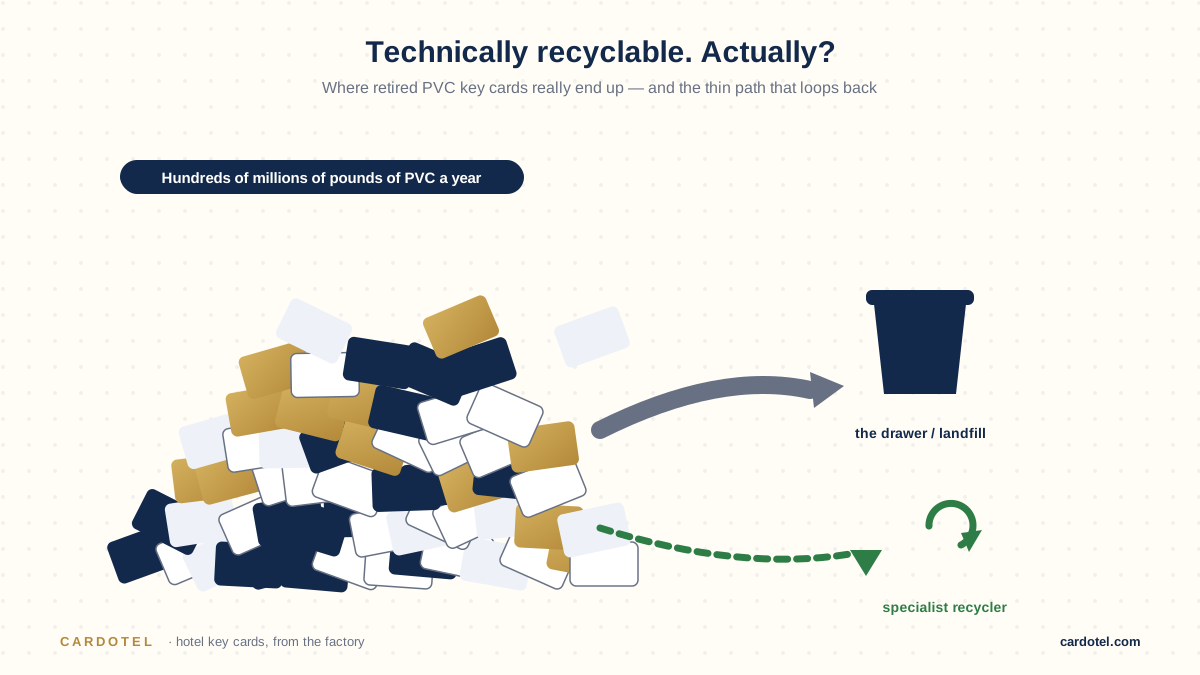
PVC key cards are technically recyclable, but almost none get recycled in practice. Here's which card materials actually can be, and why RFID complicates it.
Start your order
Share your lock and encoder details, quantity per design, artwork and destination. Confirm card options, MOQ, sample costs and delivery in your quote.