
How Many Key Cards Does a Hotel Need? A Quantity Planning Guide
Estimate hotel key card replacements from stays and reusable returns, then plan order quantities, stock reserves and reorder timing with worked examples.

Every hotel key card starts as a design file, but what actually reaches a guest's hand depends on the printing method behind it. Offset and silkscreen are the two workhorses of card printing, and the choice between them changes cost, lead time, and how the finished card looks and feels.
This guide breaks down how each method works, where it fits, and what finishing options change the final result. When preparing artwork, start with the CR80 key card design templates and check the bleed, safe area and orientation against your printer’s final specification.
Underneath the artwork, a key card is layered material — plastic, wood veneer, or a paper-based composite — with the printed graphic sandwiched in, a chip or magnetic stripe embedded, then laminated and die-cut to final size. The printing method determines how that graphic layer gets applied before the card is assembled.
An image is transferred from a printing plate onto a rubber blanket, then from the blanket onto the card surface. It is a mature, well-understood process capable of very fine detail.
Plate setup adds lead time and upfront cost, so offset makes more sense for a full production run than a small sample batch. Any design change means a new plate, which is worth knowing before finalizing artwork late in the process.
Ink is pushed through a mesh screen with a squeegee, one color layer at a time. Non-paper substrates like PVC or wood need specialty inks formulated to bond to that surface.
Color blending is limited compared with offset, and the process is more hands-on, so batch-to-batch consistency depends heavily on the vendor's experience. It is not the best match for photo-realistic artwork.
| Factor | Offset printing | Silkscreen printing |
|---|---|---|
| Best for | Detailed or photographic artwork | Simple logos and text |
| Color range | Broad, including gradients | Limited to spot colors |
| Setup cost and lead time | Plate setup; assess cost at the planned volume | Screen setup per color; confirm ink and curing requirements |
| Typical run size | Larger production runs | Small to mid-size runs |
| Surface fit | Strong on PVC and paper-based cards | Strong opaque coverage on wood or dark cards |
Printing on wood veneer or paper-based cards can require different inks, primers or finishing than PVC. Confirm the process for the selected construction and review a physical proof. A different material or formulation does not by itself establish a lower environmental footprint.
Before approving a bulk print run, request samples for artwork, color and finish review. Include the artwork revision, intended material and quantity per design, and ask whether the sample uses the proposed production process. Confirm sample charges and preparation and shipping arrangements.
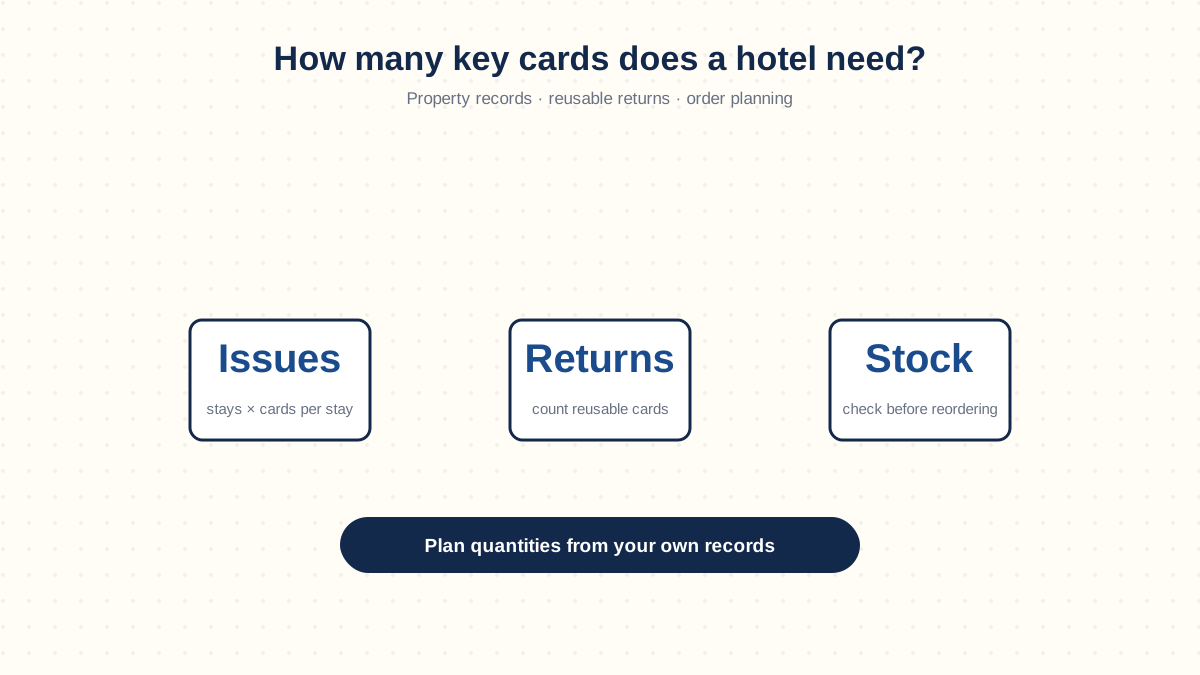
Estimate hotel key card replacements from stays and reusable returns, then plan order quantities, stock reserves and reorder timing with worked examples.
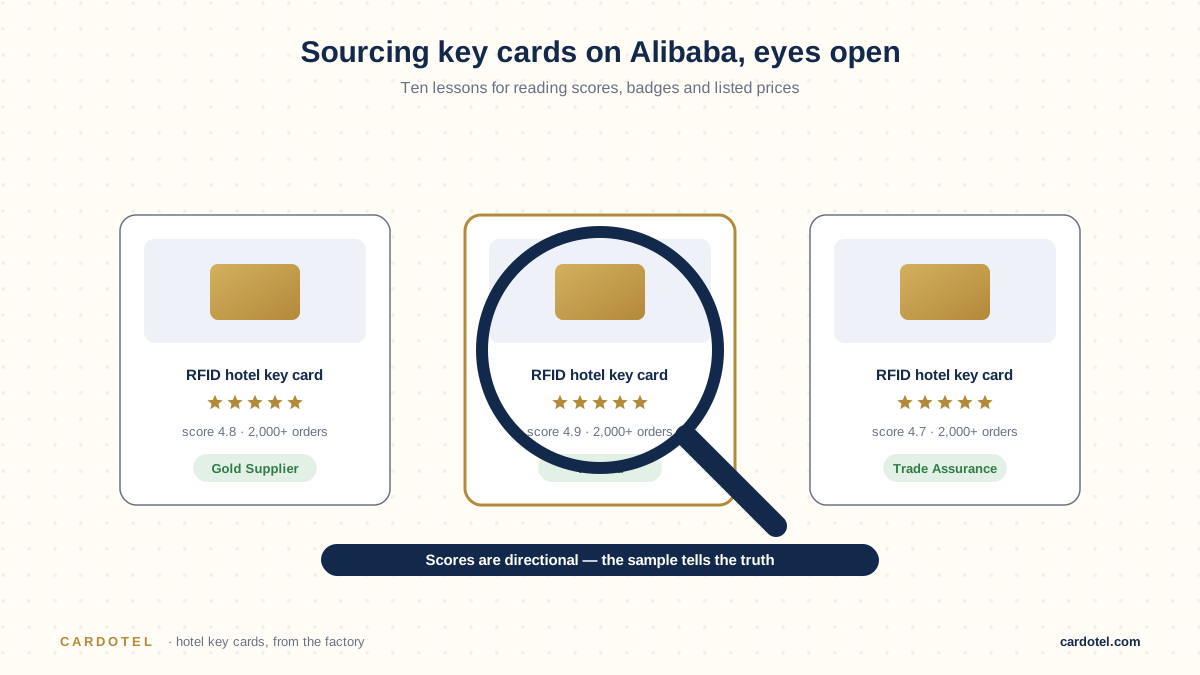
12 supplier questions, a sample-test protocol, a video-tour checklist and importing basics (Incoterms, HS codes) for vetting a key card factory in China.

Practical design tips for hotel key cards that reinforce your brand, from layout and typography to material choice and finishing touches guests notice.