
RFID in Hospitality: The Complete Guide Beyond Room Keys
A complete guide to RFID in hospitality beyond room keys, covering access control, resort wristbands, inventory tracking, and staff accountability.
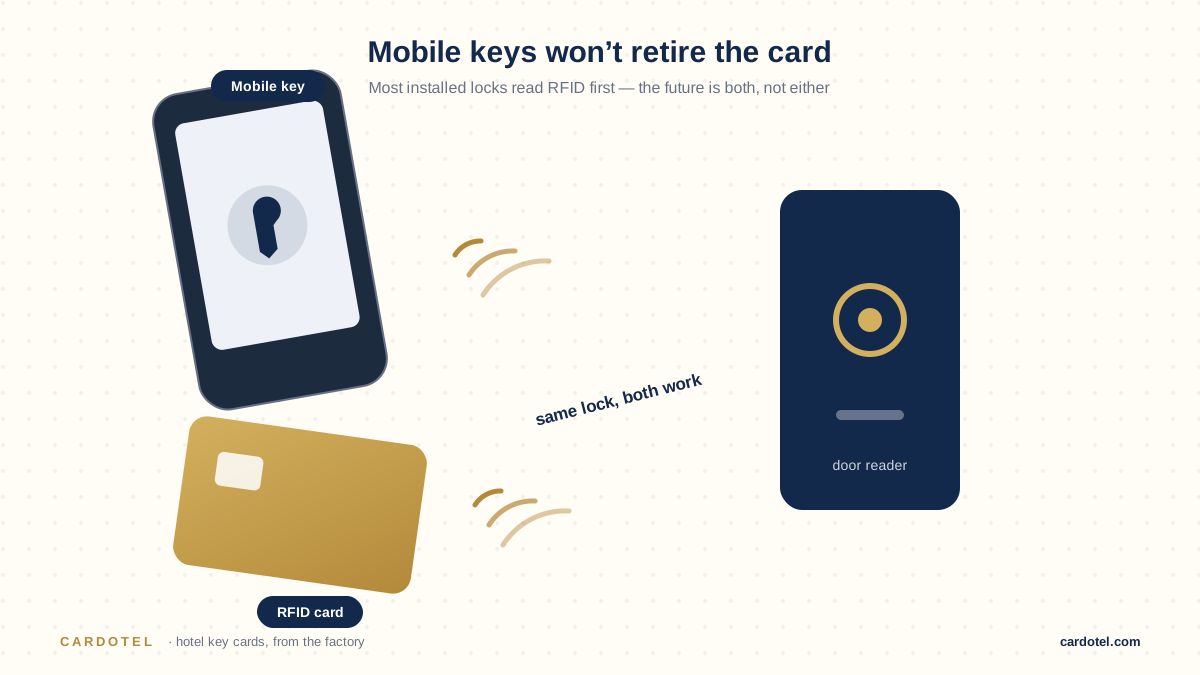
Every few years, an article declares that mobile phones are about to make the hotel key card obsolete. It hasn't happened yet, and the reason is structural: the vast majority of installed hotel locks — Saflok, Onity, VingCard, SALTO, Kaba, and others — are built around reading a physical RFID credential. Mobile and biometric access typically sit alongside that installed base rather than replacing it outright.
That said, real change is happening — just not all in the direction the headlines suggest. Here is where mobile, wearable, and material innovation are actually heading, and what that means for a property planning its next few years of access technology.
Mobile keys use Bluetooth or NFC to let a guest's phone act as a credential, usually issued through the hotel's own app or a booking platform integration. It works well for guests who download the app in advance and have a compatible, charged phone — but every property offering it still needs a physical card fallback for guests who don't, won't, or can't use the app, plus device compatibility testing across phone models and OS versions.
The operational reality is that mobile key deployments today run in parallel with physical cards, not instead of them, which is why card orders haven't meaningfully declined at properties that added mobile access.
Resort wristbands already function as a wearable credential at many properties — RFID wristbands for pool, spa, and room access are a mature, well-tested category, not a future concept. Smartwatch unlock (extending a phone's mobile key to a paired watch) is a smaller but growing niche. Biometric access — fingerprint or facial recognition — shows up mostly at very high-security or ultra-luxury properties, where the cost of the reader hardware and the guest comfort trade-offs are easier to justify.
A material change may be possible without replacing the locks, but the exact chip, credential configuration, antenna performance and finished dimensions must suit the installed system. Confirm the lock model, encoder and software requirements, then test a sample on the property’s authorized encoder and doors before approving an order. Compare any proposed sustainability claim against the complete card construction, expected reuse and available disposal route.
| Method | Needs a backup? | Guest device dependency | Typical adoption today |
|---|---|---|---|
| Physical RFID card | No | None | Universal |
| Mobile app key | Yes — a card fallback | Compatible smartphone, app installed | Growing, mostly at larger chains |
| Wearable (wristband) | No, functions independently | None | Common at resorts and water parks |
| Biometric | Usually yes | None, but requires enrollment | Limited to select high-security properties |
Where digital access does pay off operationally is in the data layer: real-time occupancy visibility, streamlined check-in for guests who skip the front desk, and the ability to update access permissions remotely without reissuing a physical card. The trade-off is added responsibility for data security and staff training, since any digital access layer introduces new failure points — lost phones, app bugs, network outages — that a physical card simply doesn't have.
Planning an order? Contact Cardotel with your lock and encoder details, required card or wristband specification, quantity per design and destination. Request a project quote and confirm sample availability, charges, preparation and shipping.

A complete guide to RFID in hospitality beyond room keys, covering access control, resort wristbands, inventory tracking, and staff accountability.

RFID laundry tags let hotels track every towel and sheet from room to laundry facility and back. Here's exactly how the scanning and data loop works.
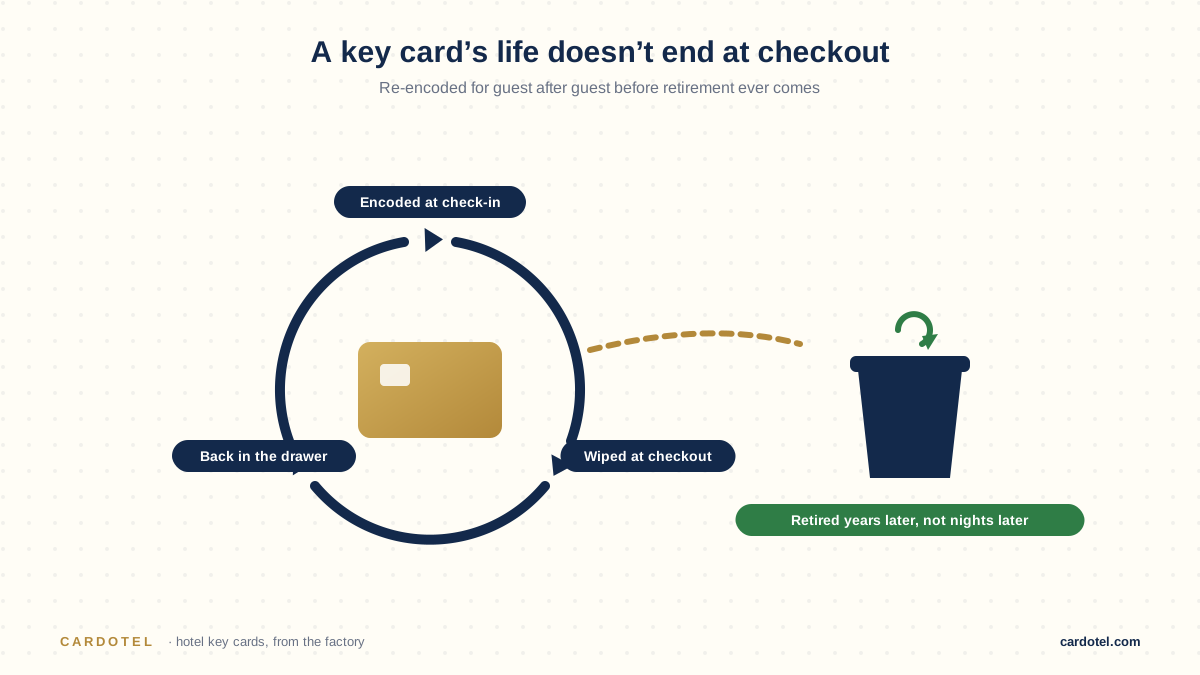
Hotels rarely trash key cards after one stay. Here's the real lifecycle of a hotel key card, from check-in encoding to final retirement and disposal.
Start your order
Share your lock and encoder details, quantity per design, artwork and destination. Confirm card options, MOQ, sample costs and delivery in your quote.