
RFID vs Magstripe Key Cards: Which Fits Your Property?
RFID and magstripe key cards differ on cost, lifespan, and maintenance. Compare both technologies to pick the right fit for your hotel's locks and budget.

There's no single "best" hotel locking system, only the best fit for a specific property, budget, and guest profile. A 40-room roadside motel and a 300-room resort have almost nothing in common in terms of what their locks need to do, even though both are technically hotels.
This guide breaks down the main system types available today, the questions worth asking before you commit, and how to match a system to the kind of property you actually run.
Still found in budget and legacy properties, mechanical locks use a physical key and cylinder with no electronic component at all. They're the cheapest option to install and the simplest to understand, but keys get copied, lost keys mean re-keying a cylinder, and there's no way to track who accessed a room or when.
Magstripe systems encode room and validity data onto a magnetic stripe, read by swiping the card through a slot on the door. They're a meaningful security step up from mechanical locks at a moderate cost, but the stripe itself wears with repeated swiping and can demagnetize near phones and other magnetized objects, leading to the occasional "my key doesn't work" trip back to the front desk.
RFID locks replace the swipe with a tap, reading a chip embedded in a card, fob, or wristband instead of a magnetic stripe. They cost more upfront than magstripe but hold up better to daily wear, read faster, and allow instant remote deactivation of lost cards. RFID is available in standard and encrypted tiers, with encrypted versions adding cryptographic authentication for properties that want a harder-to-clone credential.
Rather than a standalone system, mobile access is usually layered on top of an existing RFID installation, letting guests use a smartphone app as an additional credential alongside, not instead of, a physical card. It's a genuine guest convenience for tech-forward travelers, but it depends on wireless connectivity and isn't a full substitute for physical cards, which remain the more dependable option for every guest regardless of phone battery or app familiarity.
| System | Relative cost | Security | Power-failure behavior | Guest experience |
|---|---|---|---|---|
| Mechanical | Lowest | Basic | Unaffected (no power needed) | Dated but simple |
| Magnetic stripe | Low to moderate | Moderate | Varies by lock model | Familiar, occasional read failures |
| Standard RFID | Moderate | Good | Usually battery-backed | Fast, modern |
| Encrypted RFID | Highest | Very high | Usually battery-backed | Fast, modern |
If you're weighing terminology you haven't seen before, our FAQ page covers many of the basics in plain language.
Budget and economy properties with tight renovation budgets often start with hico magnetic stripe systems, a meaningful security upgrade over mechanical locks without the full cost of RFID. Midscale and upper-midscale hotels are increasingly standardizing on standard RFID, where the durability and instant-deactivation benefits offset the higher per-door cost within a reasonable ownership period. Upscale, luxury, and casino properties more often justify encrypted RFID, both for the added security and because brand standards frequently require it outright. Resorts and properties with pool or beach amenities should also weigh wristbands alongside cards, since they solve a practical problem cards don't: guests don't want to carry a wallet by the pool.
Whichever system you shortlist, check what its cards will cost you per year in the key card cost guide — credential costs differ more between systems than most buyers expect.
Planning an order? Contact Cardotel with your lock and encoder details, required card or wristband specification, quantity per design and destination. Request a project quote and confirm sample availability, charges, preparation and shipping.

RFID and magstripe key cards differ on cost, lifespan, and maintenance. Compare both technologies to pick the right fit for your hotel's locks and budget.
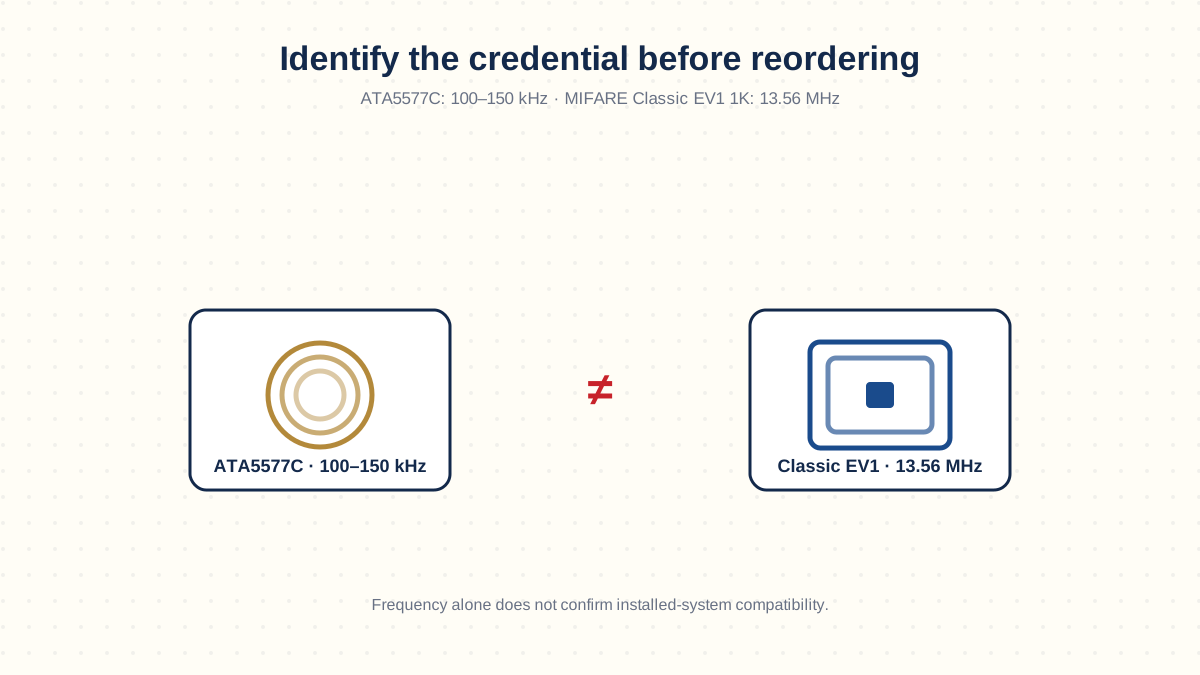
Compare ATA5577C and MIFARE Classic EV1, understand phone NFC limits, and verify the installed lock and encoder specification before ordering hotel key cards.
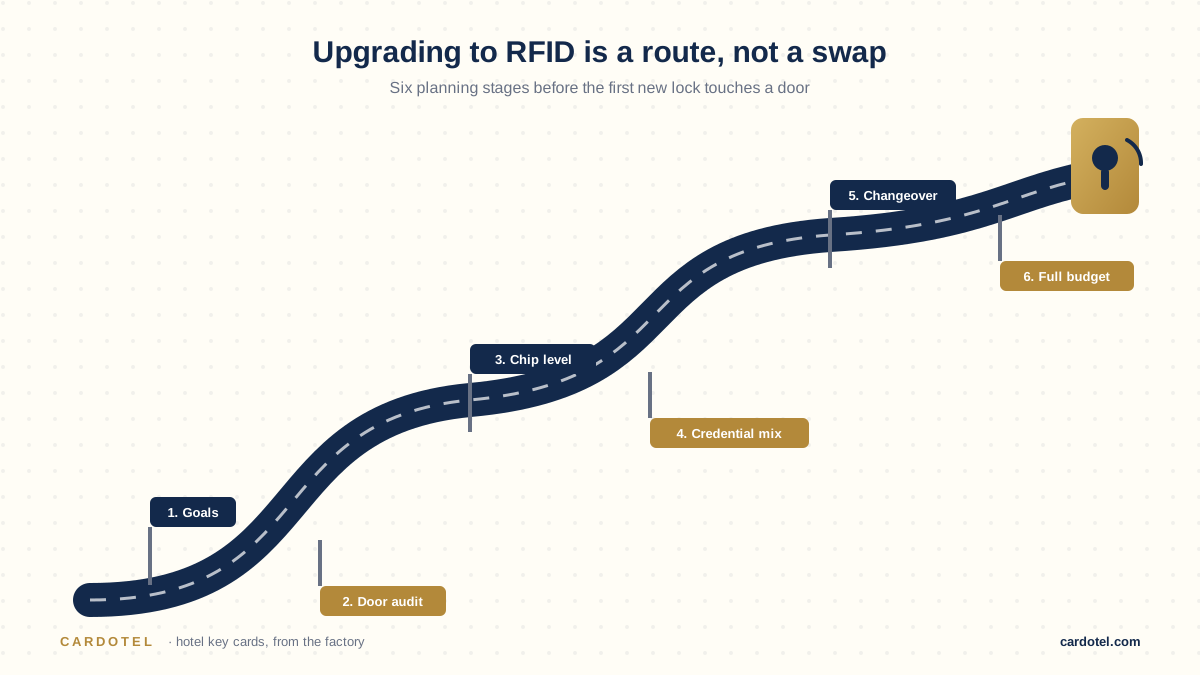
Plan an RFID lock upgrade in 6 steps: why hotels leave magstripe, MIFARE chip families, phased rollout, PMS and encoder checks, and a decision table.
Start your order
Share your lock and encoder details, quantity per design, artwork and destination. Confirm card options, MOQ, sample costs and delivery in your quote.