
Upgrading Hotel Locks to RFID: An Owner's Planning Guide
Plan an RFID lock upgrade in 6 steps: why hotels leave magstripe, MIFARE chip families, phased rollout, PMS and encoder checks, and a decision table.

If your hotel has RFID door locks, there's a good chance the cards behind the front desk are MIFARE cards, even if nobody on staff has ever used that word. MIFARE isn't a single product; it's a family of chip technologies that has become the de facto standard for contactless hotel key cards, transit passes, and access badges worldwide.
Understanding the families helps you ask for the right credential specification. If your current card is unidentified, follow the hotel key card chip identification guide before requesting a replacement; a family name or frequency alone is not an ordering specification.
MIFARE was introduced in 1994 by Philips, whose chip division later became NXP Semiconductors, which still owns the brand today. It was built originally for transit fare collection, and its combination of low cost, contactless convenience, and reasonable security made it a natural fit for hospitality access control as hotels moved away from magnetic stripes. Decades on, MIFARE-based chips remain one of the most widely deployed contactless card families in the world; most travelers have tapped one without realizing it, whether on a transit system like London's Oyster card or a hotel room door.
Why the history matters for a buyer: MIFARE has been through several generations. Your installed readers, issuing software and configured applications determine which credentials they can use. An upgrade needs the system provider’s approval, not just a different card in the same physical format.
A MIFARE card is built around a small chip and antenna operating under the ISO/IEC 14443 standard, at a frequency of 13.56 MHz, with a typical read range of a few centimeters, close enough that a deliberate tap is required, which is exactly the point for access control. The chip stores identifying data and, depending on the variant, supports encryption to prevent that data from being copied onto a blank card.
These are examples from selected generations, not an exhaustive current catalogue. Check the exact part number, usable memory and security configuration for the proposed card; the table does not establish compatibility with a hotel installation.
| Variant | Typical memory | Security | Best fit |
|---|---|---|---|
| MIFARE Ultralight EV1 | 48 or 128 bytes of user memory | Limited protection; not the same as Ultralight C or AES | Limited-use systems specifying this exact variant |
| MIFARE Ultralight C | 144 bytes of user memory | 3DES authentication | Installations configured for Ultralight C credentials |
| MIFARE Classic | 1 or 4 KB in common EV1 products | CRYPTO1; assess legacy security requirements | Existing installations with a confirmed Classic specification |
| MIFARE Plus | Depends on the part and generation | AES capability; operating security level matters | Provider-planned migration with compatible readers and software |
| MIFARE DESFire | Depends on the part and generation | Cryptographic and multi-application features vary by generation | Systems configured for the required DESFire applications |
MIFARE Classic may be specified in an existing installation, but it should not be selected as a default based on hotel size or room price. NXP’s MIFARE Classic guidance directs security-relevant applications to its Plus and DESFire families. Ask your system provider to assess the installation and any migration requirements.
MIFARE Plus offers a migration path with different security levels. Its EV2 product documentation describes legacy compatibility and AES features, but the installed reader, software and active security level determine what a deployment actually uses. Do not assume a card-only swap upgrades security.
MIFARE DESFire can support multiple applications where the system has been configured for them. Confirm the generation, memory and application requirements with the providers responsible for door access and any payment or loyalty service; buying a DESFire card does not enable those services by itself.
MIFARE Ultralight includes distinct products with different protection mechanisms. EV1, C and AES are not interchangeable specifications. A short stay or disposable card does not remove the need to match the system’s approved credential and security requirements.
Two properties using the same lock brand may require different credentials. Use the lock and encoder compatibility checks to collect the model, software and configuration details for your property. The finder organizes those details; it does not identify a replacement chip from a brand name.
For example, the Saflok key card purchasing requirements distinguish the installed reader, issuing software and credential preparation. Confirm those details with your installer before treating a published MIFARE option as the card to reorder.
Once the credential is confirmed, request cards for an on-site encoding and access test. Include the exact chip specification if known, lock and encoder models, intended material and destination. Confirm the sample scope, charges and shipping before approval.
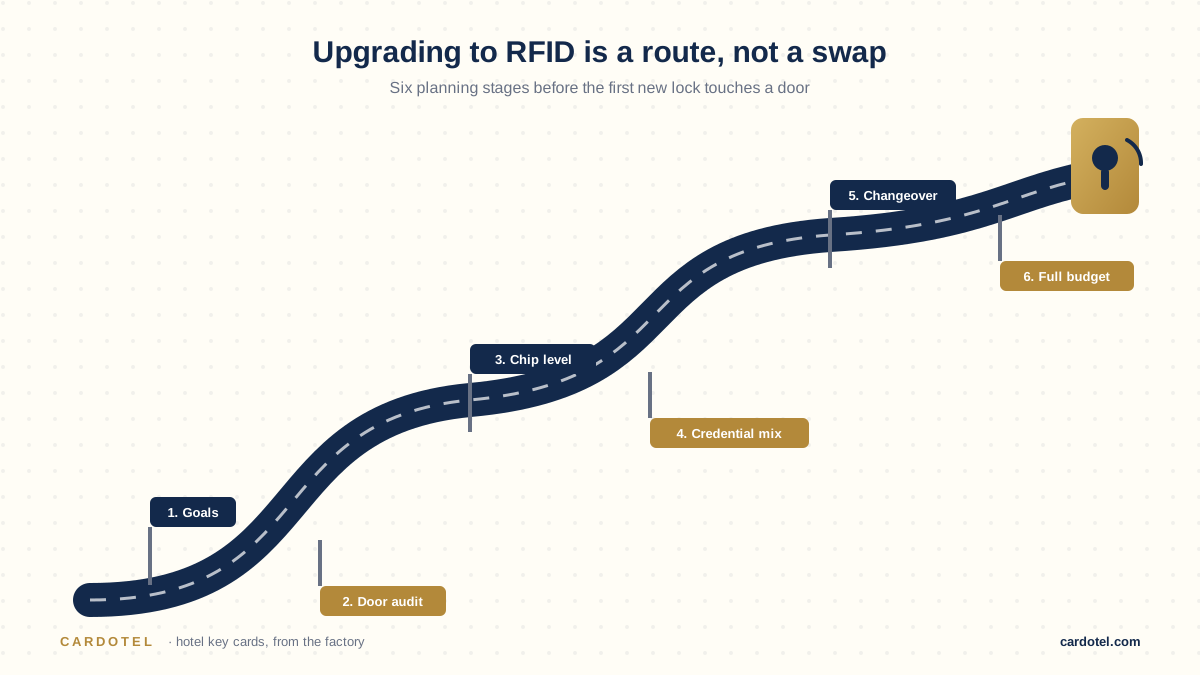
Plan an RFID lock upgrade in 6 steps: why hotels leave magstripe, MIFARE chip families, phased rollout, PMS and encoder checks, and a decision table.
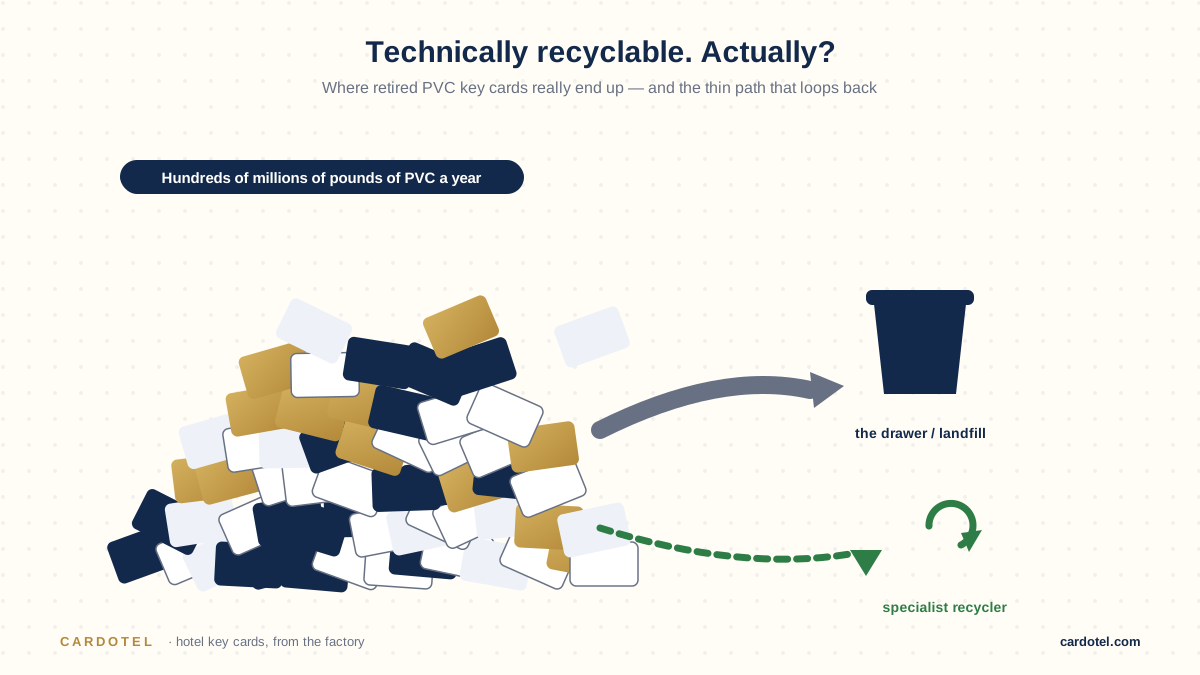
PVC key cards are technically recyclable, but almost none get recycled in practice. Here's which card materials actually can be, and why RFID complicates it.

A practical guide to hotel key cards covering chip types, lock brand compatibility, eco-friendly materials, printing, and costs before you order.