
Hotel Key Cards: The Complete Buyer’s Guide (2026)
A practical guide to hotel key cards covering chip types, lock brand compatibility, eco-friendly materials, printing, and costs before you order.

Almost every hotel door lock built today runs on one of two credential technologies: RFID or magnetic stripe. Both open a door reliably when they're working, but they get there in very different ways — and that difference shows up in your budget, your maintenance schedule, and how a card feels in a guest's hand.
If you're specifying key cards for a new build, a renovation, or just a lock refresh, it's worth understanding both technologies before you commit an entire property to one.
Here's how RFID and magstripe actually compare, and how to decide which one fits your situation.
An RFID card carries a small chip and antenna — an inlay — embedded inside the card body. Instead of swiping, a guest simply holds the card near the reader; the chip transmits its access code over a short-range radio signal, the lock checks it, and the door releases. There's no physical contact and nothing to line up.
RFID hardware from major lock brands — Saflok, Onity, SALTO, VingCard, and Kaba all offer proximity systems — has become the default choice for new installations and full-property upgrades over the past decade.
A magstripe card stores its access data on the magnetized strip on the back, and the guest swipes it through a slot reader for the stripe to be read. Stripes come in two grades: HiCo (high coercivity), which resists demagnetization better and costs more, and LoCo (low coercivity), which is cheaper but wears out and can be wiped by a stray magnet — including, occasionally, a cell phone or a handbag clasp — much more easily.
| Factor | RFID | Magnetic stripe |
|---|---|---|
| How it's read | Contactless, held near reader | Swiped through a slot |
| Typical card lifespan | Longer — fewer contact scratches | Shorter, especially on LoCo stock |
| Demagnetization risk | None | Real, from magnets and some electronics |
| Lock hardware cost | Higher upfront investment | Often lower, especially if already installed |
| Ongoing maintenance | Lower — readers need little upkeep | Regular reader-head cleaning required |
| Guest perception | Reads as modern, premium | Reads as familiar, standard |
If you're building new, renovating, or repositioning a property toward a higher tier, RFID is almost always the better long-term bet. The lock hardware costs more upfront, but lower card replacement rates and less reader maintenance tend to close that gap over a few years of operation.
If you already have a functioning magstripe lock fleet and it's not causing problems, ripping it out purely to chase RFID rarely pays for itself on its own. Magstripe remains a perfectly workable, lower-cost technology — it simply asks for more day-to-day care, particularly around magnet exposure and reader cleaning.
Guest turnover matters too. Properties that reissue a high volume of cards — extended-stay hotels with frequent walk-ins, or resorts running large group blocks — feel card lifespan differences more acutely than a boutique property with a smaller nightly footprint.
A material change may be possible without replacing the locks, but the exact chip, credential configuration, antenna performance and finished dimensions must suit the installed system. Confirm the lock model, encoder and software requirements, then test a sample on the property’s authorized encoder and doors before approving an order. Compare alternative card materials against the complete specification.
For current per-card price ranges of both formats, see the hotel key card cost guide; to confirm what your locks accept, try the compatibility finder.

Planning an order? Contact Cardotel with your lock and encoder details, required card or wristband specification, quantity per design and destination. Request a project quote and confirm sample availability, charges, preparation and shipping.

A practical guide to hotel key cards covering chip types, lock brand compatibility, eco-friendly materials, printing, and costs before you order.
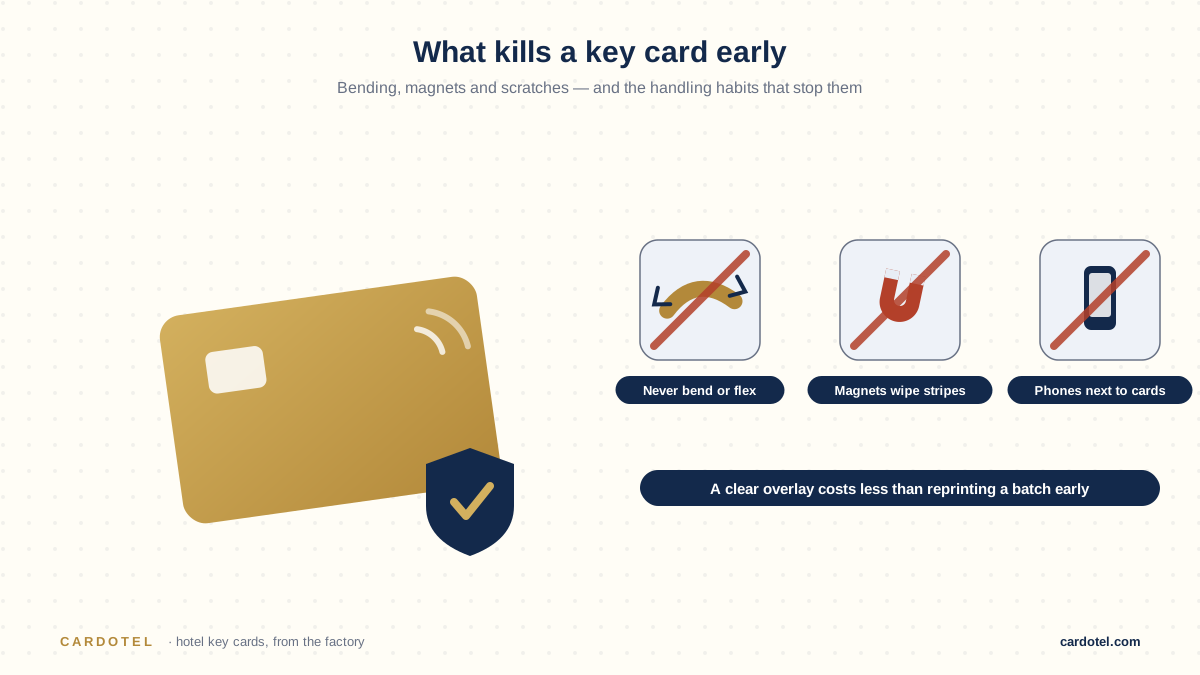
Cheap foil, rough handling, and heat all shorten a hotel key card's life. Use these sourcing and care habits to cut reissue costs and reduce card waste.
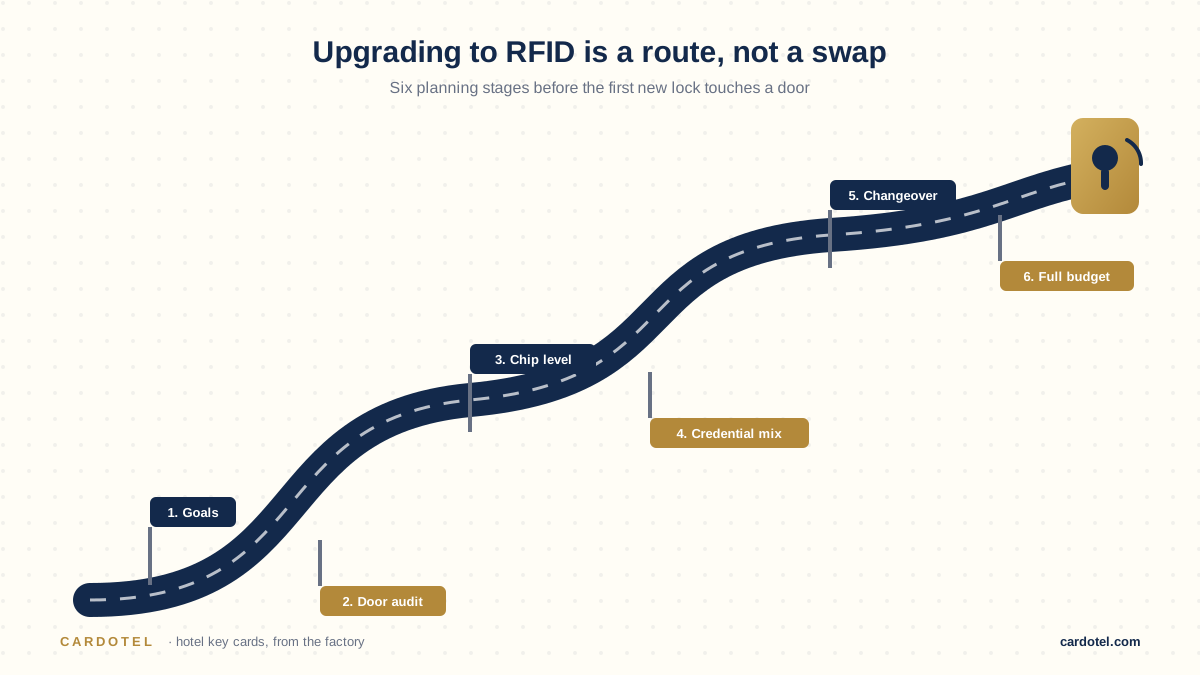
Plan an RFID lock upgrade in 6 steps: why hotels leave magstripe, MIFARE chip families, phased rollout, PMS and encoder checks, and a decision table.
Start your order
Share your lock and encoder details, quantity per design, artwork and destination. Confirm card options, MOQ, sample costs and delivery in your quote.