
RFID vs Magstripe Key Cards: Which Fits Your Property?
RFID and magstripe key cards differ on cost, lifespan, and maintenance. Compare both technologies to pick the right fit for your hotel's locks and budget.
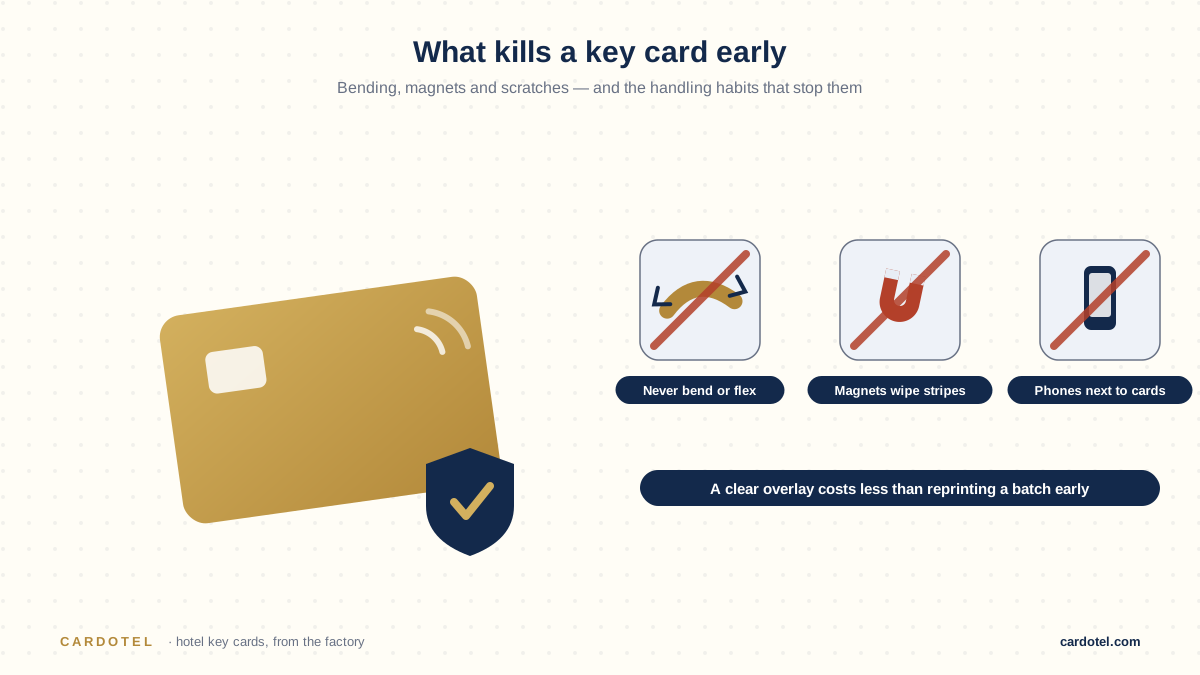
Reissuing key cards is a real, recurring line item — not just the cost of the blank stock, but the staff time to encode it and the environmental footprint of every discarded card. A handful of sourcing and handling choices can meaningfully stretch how long a batch lasts before a property needs to reorder.
None of these require exotic equipment or a big budget shift. Most are decisions you make once, either with your key card supplier or in day-to-day front-desk habits.
Special finishes like gold foil stamping look sharp on day one, but cheap foil stock fades and flakes off within weeks of regular handling. Ask a supplier what foil grade they run — recognized industry foil brands like Kurz hold up considerably longer than generic stock — and whether they laminate a protective overlay over the stamped finish. That overlay adds a small cost but meaningfully extends how long the finish actually survives being carried in a pocket.
Beyond protecting a foil finish, a thin transparent overlay film — typically 0.04 to 0.08 mm — laminated over the printed face protects the artwork itself from scuffing and fading. It's a small addition to standard PVC construction that pays off over a card's working life, especially for cards that see months of active use rather than a single guest stay.
RFID cards avoid the physical contact that causes most magstripe wear, since there's no swiping involved — but the internal chip's performance can still degrade with sustained heat exposure, so keeping cards out of hot cars and direct sun still matters.
Magstripe cards need the opposite kind of attention: keep them away from magnets and phones, and get door-side readers cleaned on a regular schedule — weekly is a reasonable baseline for high-traffic doors — since a dirty reader head can misread a perfectly good card and get blamed on the card itself.
Reusing serviceable cards can reduce the number of replacements a property needs. Compare material options using actual reuse, rejection and collection records, together with applicable product evidence; a material substitution alone does not establish a lower overall impact.
| Do this | Avoid this |
|---|---|
| Store cards in a sleeve or holder when not in active use | Carrying a card loose in a back pocket |
| Keep cards dry and out of direct heat | Leaving cards on a dashboard or poolside table |
| Request an overlay finish on printed or foiled cards | Stacking cards loosely against other magnetic items |
| Use HiCo stripe stock on high-traffic doors | Running LoCo stock past its practical reorder point |
| Put front-desk encoders on a cleaning schedule | Assuming every failed swipe means the card is bad |
Planning an order? Contact Cardotel with your lock and encoder details, required card or wristband specification, quantity per design and destination. Request a project quote and confirm sample availability, charges, preparation and shipping.

RFID and magstripe key cards differ on cost, lifespan, and maintenance. Compare both technologies to pick the right fit for your hotel's locks and budget.

Losing a hotel key card isn't a security crisis. Here's what guests should do next, and the reissue procedure every hotel front desk should have ready.

Guest, staff, supervisor, master, grandmaster, and emergency cards each open different doors. Compare all 6 hotel key card types and how to manage them.
Start your order
Share your lock and encoder details, quantity per design, artwork and destination. Confirm card options, MOQ, sample costs and delivery in your quote.