
Are Hotel Key Cards Secure? An Honest Assessment
Hotel key cards rely on rotating codes and encrypted chips to stay secure. An honest look at what protects guests, and where the real risks actually sit.

If you lose a hotel key card, report it to the front desk promptly. A missing card does not automatically mean your payment details have been exposed, but the hotel needs to handle access to your room and any services linked to that credential. What the card stores and how it is canceled depend on the property’s system.
This guide covers both sides of a lost card: what a guest should do the moment they realize it's missing, and what the front desk should already have in place to handle it smoothly.
Online warnings about hotel key cards often treat every system as the same. That is too broad: the card’s fields and enabled applications depend on the installation. Ask the property if you are concerned about its data practices, and report the loss rather than relying on a general claim about what every card does or does not contain.
These are examples of information used by hotel key card systems, not a universal list. The exact data and additional applications vary; do not assume all cards exclude personal information or payment-related identifiers.
Check pockets, bags, and the room itself, but do not delay reporting a card that appears to be missing.
Tell staff the card is missing and ask them to follow the property’s cancellation and replacement procedure. Cancellation may need an update to reach the door, so do not assume a reported card is immediately unusable. If you are concerned about your room’s security, ask staff for help while they handle the report.
If you are unsure when you last used the card, ask whether authorized staff can review the relevant access records. Available logs may help investigate a concern, but they do not by themselves prove that no unauthorized entry occurred.
Follow the front desk’s identity check and replacement procedure. Staff may ask for ID or reservation details to verify that you are the registered guest, then explain any steps needed to cancel the missing credential at the door.
The update path matters: SALTO’s denylist explanation, for example, describes cancellation information traveling through its virtual network. Follow the procedure for your installation instead of assuming that every offline door changes immediately.
When sourcing replacement stock, use the key card sample acceptance checklist to plan on-site checks, including issuing, expiry and the property’s cancellation workflow, before approving the proposed cards.
| The assumption | The practical answer |
|---|---|
| Every card contains the same personal and financial data | Stored fields and linked services depend on the property’s system |
| Keeping the card guarantees safety after checkout | Follow the return policy; expiry and cancellation use the installed system’s workflow |
| A lost card automatically exposes payment details | Loss alone does not establish a data exposure; report it so staff can address access and linked services |
A card holder or sleeve — see our key card accessories — keeps a card from sliding loose in a bag or getting damaged alongside coins and keys, and makes it easier to feel for by touch. Beyond that, keeping the card on you at all times, closing the door fully on every entry and exit, and not saying your room number out loud in a public area are simple habits that reduce both loss and misuse risk.
Have another question about hotel key cards? Browse our full FAQ page for more guest and procurement answers.

Hotel key cards rely on rotating codes and encrypted chips to stay secure. An honest look at what protects guests, and where the real risks actually sit.

A practical guide to encrypted hotel locking systems: what encryption really means, who actually needs it, and what it costs versus standard RFID.
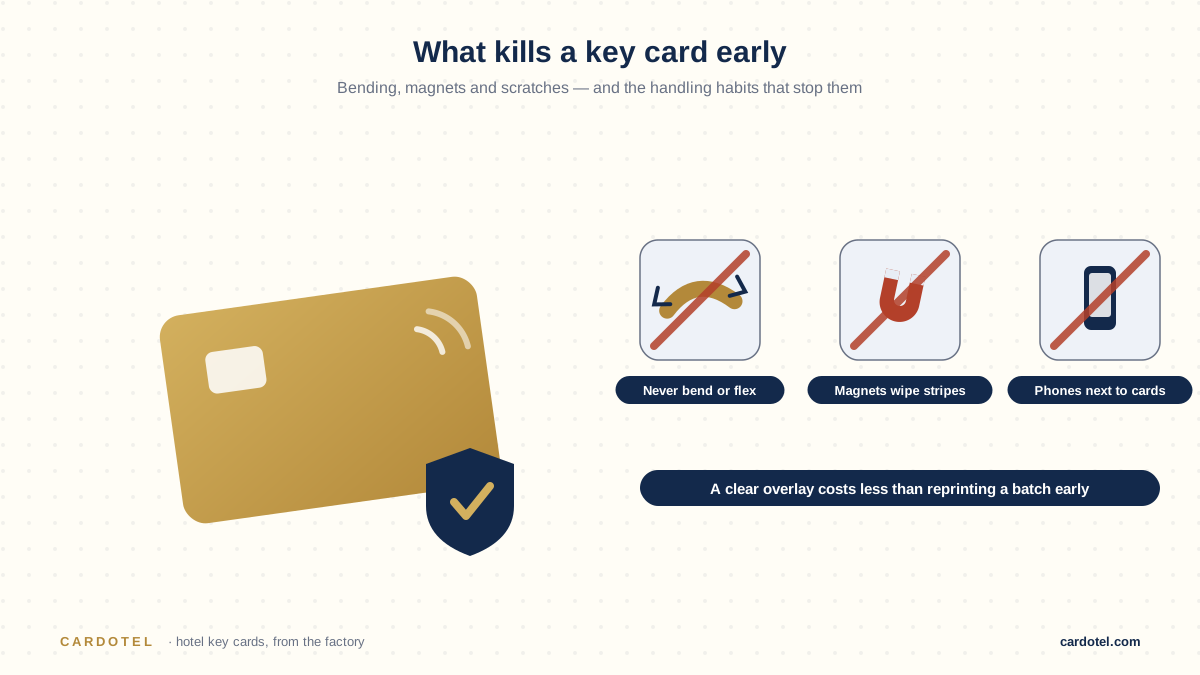
Cheap foil, rough handling, and heat all shorten a hotel key card's life. Use these sourcing and care habits to cut reissue costs and reduce card waste.
Start your order
Share your lock and encoder details, quantity per design, artwork and destination. Confirm card options, MOQ, sample costs and delivery in your quote.