
MIFARE Cards Explained: A Practical Guide for Hotels
A practical guide to MIFARE cards for hotels: how they work, the Classic, Plus, and DESFire variants compared, and which one fits your property.

Walk into almost any renovated mid-scale or upper-scale hotel today and the door lock will read a card rather than accept a swipe or a metal key. That shift didn't happen because of a single dramatic security failure. It happened because RFID quietly solves a long list of small, recurring problems that add up to real operating costs over time.
Here's what's actually driving the switch, property by property.
A lost mechanical key used to mean a real security question: does the cylinder need re-keying? A lost RFID card is a non-event by comparison. Deactivate it in the system, cut a new one, and the old card is worthless the moment it's turned off. That single change removes one of the more expensive and disruptive line items from hotel security management.
Anyone who's traveled with a hotel key card in the same pocket as a phone knows the magstripe failure mode: card stops working, guest walks back to the front desk, front desk re-encodes a new card, guest walks back to their room. RFID chips don't demagnetize near phones or other cards, which quietly removes a recurring front-desk interruption that adds up across a property with hundreds of rooms turning over daily.
The upfront cost of RFID hardware is higher than magstripe, but the ongoing costs tend to run lower: no re-keying cylinders, fewer reprints from stripe failures, and remote management that reduces the staff time spent on lock-related front-desk visits. Properties evaluating the switch should look at total cost over a multi-year ownership period, not just the initial installation quote.
RFID systems typically support remote access management and detailed entry logs, meaning a property manager can review access activity, adjust permissions, or troubleshoot a lock issue without physically visiting every door. Multi-user and multi-locker configurations also make staff and housekeeping access easier to manage than juggling a large physical key ring across a big property.
RFID locks have no exposed card slot or swipe mechanism to let in moisture, dust, or salt air, a genuine advantage for coastal resorts, poolside rooms, and humid climates where a magstripe reader's mechanical slot is often the first thing to fail. Tap-based access simply has fewer moving parts exposed to the environment.
Once a property is running RFID, adding a Bluetooth mobile-key overlay or extending the same credential to wristbands for pool and amenity areas becomes a software layer rather than a hardware replacement. Hotels that adopt RFID now are typically setting themselves up for those additions later without a second full lock replacement.
None of this makes RFID maintenance-free. Readers still need occasional battery checks and firmware updates, and staff need training on the new encoding software. But compared with the recurring costs of re-keying cylinders or reprinting demagnetized cards, most properties find RFID's ongoing maintenance considerably lighter.
Plenty of properties making this move aren't building new wings; they're replacing worn-out magnetic stripe hardware at the end of its usable life and choosing RFID instead of a like-for-like magstripe replacement. Since the labor of swapping lock hardware is similar either way, many owners reason that if the doors are already being touched, it's the moment to move to the more durable, more flexible option rather than reinstalling the same aging technology.
Guests rarely comment on the lock brand or chip technology behind their door. What they notice is friction: a card that works on the first tap every time, no fumbling with a slot in a dim hallway, and no second trip to the front desk mid-stay. RFID's biggest guest-facing win isn't a feature guests can name; it's the absence of a specific complaint they used to have without necessarily realizing why.
| Factor | Metal key | Magnetic stripe | RFID |
|---|---|---|---|
| Lost credential cost | High (re-keying) | Low | Low |
| Failure from moisture/humidity | Low risk | Moderate risk (slot exposure) | Low risk |
| Remote deactivation | No | Yes | Yes |
| Extendable to mobile/wristband | No | Limited | Yes |
Already upgraded and need matching cards? The lock compatibility hub covers chip pairings for every major system, generation by generation.
The hardware and per-card costs are higher upfront, yes. Most properties recover some of that difference over time through fewer re-keying incidents and stripe-related card failures, though the payback period depends on occupancy and how heavily the previous system was failing.
Most hotel-grade RFID locks run on internal batteries independent of building power, so they typically continue functioning during a general power outage. Confirm this specifically with your lock vendor, since behavior varies by model.
Yes. Even at properties offering mobile key apps, physical RFID cards remain standard as a fallback. Not every guest travels with a compatible, charged phone, and group or family bookings often prefer a card they can hand off easily.
Yes. RFID chips can be embedded in degradable PVC, wood, or paper-based cards just as easily as standard plastic, so switching to RFID doesn't require sacrificing a sustainability goal.
If your property is ready to move away from metal keys or aging magnetic stripe cards, Cardotel manufactures RFID hotel key cards compatible with the major lock brands. Contact us for free samples or a factory-direct quote.

A practical guide to MIFARE cards for hotels: how they work, the Classic, Plus, and DESFire variants compared, and which one fits your property.
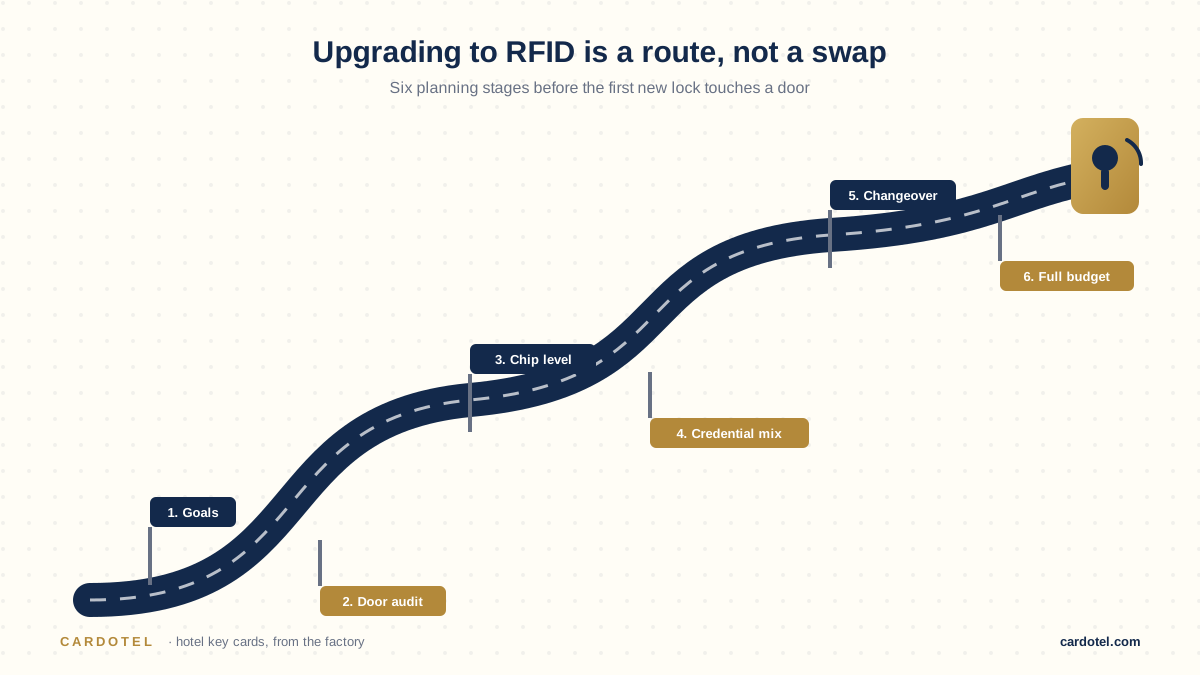
A step-by-step planning checklist for upgrading hotel locks to RFID, covering budgeting, credential choices, staff training, and rollout timing.

A practical RFID guide for hotel owners covering real return on investment, key vendor questions, and mistakes to avoid before upgrading locks.
Start your order
Send your lock brand and quantity — you will get a factory-direct quote and a free sample pack to test in your own locks before you commit.