
MIFARE Cards Explained: A Practical Guide for Hotels
A practical guide to MIFARE cards for hotels: how they work, the Classic, Plus, and DESFire variants compared, and which one fits your property.

Most of what gets written about RFID in hospitality is aimed at IT staff or lock installers. As an owner, you don't need to understand radio frequency physics. You need to know whether it's worth the money, what to ask a vendor before you sign, and what tends to go wrong when properties adopt it without a plan.
This is the owner's version: less about how RFID works, more about what it does for your bottom line and your guest reviews, and where the real decision points are.
An RFID key card carries a small chip and antenna instead of a magnetic stripe. Tap it near a reader and the two exchange a signal that either unlocks a door or, on the back end, logs an access event. Most guest-facing cards are "passive," meaning no battery, powered entirely by the reader, which is why they last so long in a guest's pocket without any maintenance.
A good vendor conversation should cover more than price per door. Before signing anything, get clear answers on:
If you're still unsure whether RFID makes sense for your property right now, a few quick questions usually clarify it. Are you spending real staff time today on lock-related front-desk visits, whether that's re-cutting demagnetized cards or re-keying cylinders after a lost key? Would losing a master card or a batch of guest cards under your current system be expensive or slow to fix? Does your brand or franchise agreement already lean toward requiring RFID or a specific encryption tier? If the answer to any of these is yes, the case for RFID is usually already stronger than the sticker price on a vendor's initial quote makes it look.
| Factor | Mechanical key | Magstripe card | RFID card |
|---|---|---|---|
| Cost to replace a lost credential | High (re-keying) | Low | Low |
| Durability in daily use | High | Moderate | High |
| Remote deactivation | Not possible | Yes | Yes |
| Guest perception | Dated | Neutral | Modern |
Usually yes, even at a modest scale. The labor savings from fewer re-key incidents and faster check-ins tend to offset the cost difference versus magstripe within a reasonable timeframe, and RFID cards hold up better under daily guest use.
In most cases, yes, as long as the new cards use the same chip technology and encoding format your locks already expect. Send a sample of your current card to a prospective supplier so they can confirm compatibility before quoting.
It depends on the lock model. Most hotel-grade RFID locks run on internal batteries rather than mains power, so a building-wide outage typically doesn't affect door access directly, but it's a question worth confirming with your specific lock vendor rather than assuming.
Most PVC-based RFID cards hold up for a year or more of active guest circulation before wear on the edges or chip failure becomes noticeable, though this varies with how heavily a property cycles through inventory and how cards are handled at checkout.
Considering an RFID upgrade or just replacing worn-out cards? Cardotel supplies hotel key cards and accessories compatible with the major lock brands. Contact us for free samples or a factory-direct quote.

A practical guide to MIFARE cards for hotels: how they work, the Classic, Plus, and DESFire variants compared, and which one fits your property.
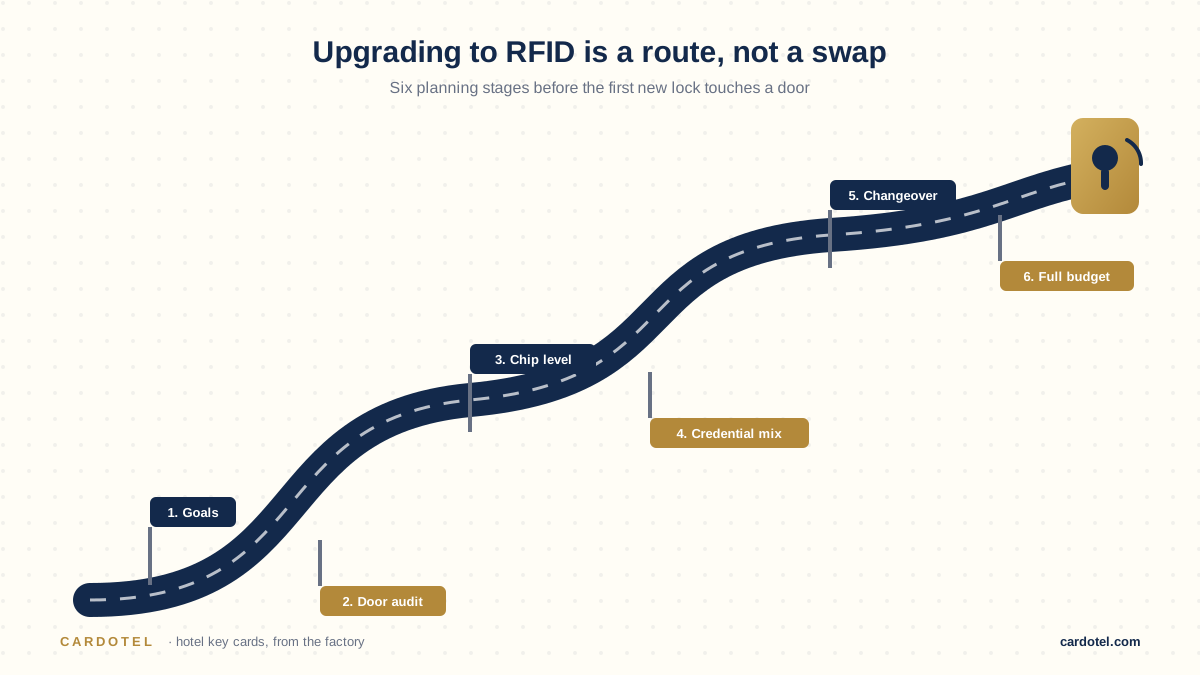
A step-by-step planning checklist for upgrading hotel locks to RFID, covering budgeting, credential choices, staff training, and rollout timing.

A clear look at why hotels keep switching to RFID door locks, from lower long-term costs to better durability and a foundation for mobile keys.
Start your order
Send your lock brand and quantity — you will get a factory-direct quote and a free sample pack to test in your own locks before you commit.