
How Hotel Key Cards Are Printed: Offset, Silkscreen & Finishes
Offset or silkscreen? Learn how each hotel key card printing method works, their trade-offs, and which finishes make a card feel more premium.
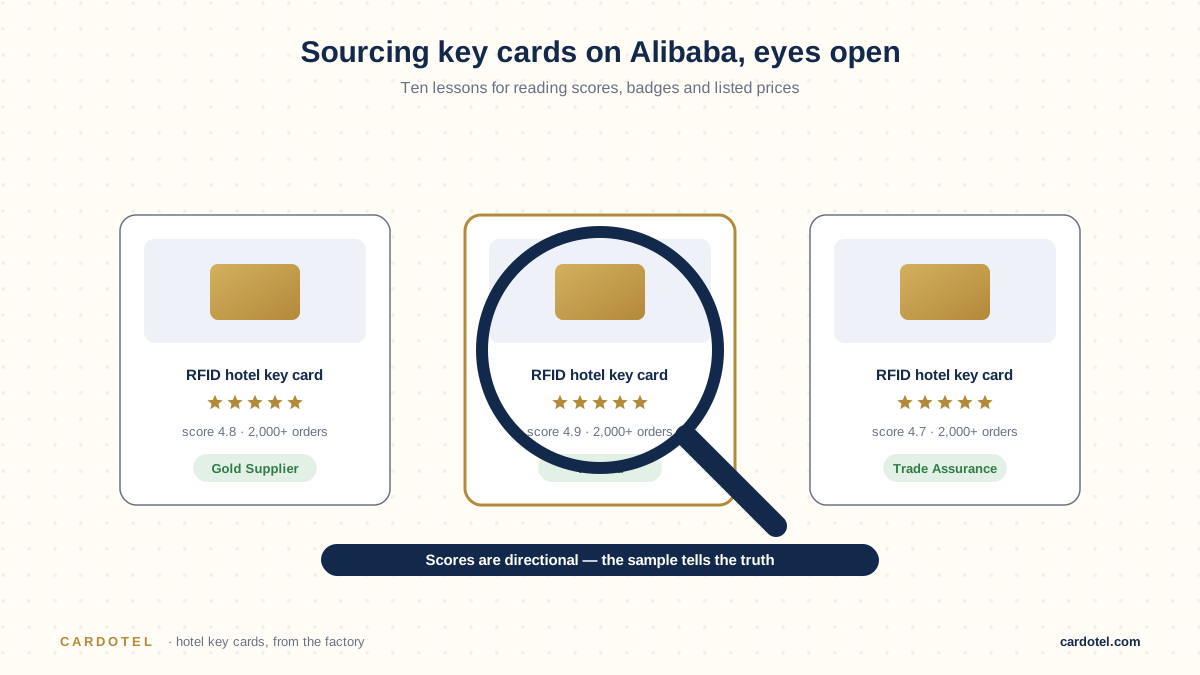
Alibaba remains one of the largest sourcing platforms for hotel key cards, with thousands of manufacturers and trading companies listing near-identical-looking products. That volume is genuinely useful for comparison shopping, but it also makes it hard to tell a reliable factory from a reseller repackaging someone else's cards — or worse, a listing that won't deliver what the photos show.
None of this means avoid the platform. It means read it correctly. Here are ten things worth checking before you commit to a supplier, plus where factory-direct sourcing — through Alibaba or otherwise — fits as one option among several.
Alibaba scores active sellers on dimensions like responsiveness, transaction history, and buyer satisfaction, and displays some version of that score to prospective buyers. A high score is a reasonable signal of an active, responsive seller — but a lower score doesn't automatically mean a bad manufacturer. Many established factories do most of their business offline or through direct relationships and only lightly maintain their online storefront, which can leave their platform score looking unremarkable despite genuine manufacturing capability.
Trade Assurance is Alibaba's buyer-protection program: if you pay through it and the order doesn't match agreed specs or ship on time, you have a documented path to a refund or resolution. It's worth using for new supplier relationships and first orders. Just be aware it typically covers what was explicitly written into the order — specs, quantities, and delivery dates — not open-ended disputes about quality expectations that were only discussed in chat.
A verified or audited badge means a third-party inspection service has confirmed the seller's business registration and, often, visited the facility. That's useful for ruling out shell listings, but it says nothing about whether this particular factory can produce the specific chip, lock compatibility, or card finish you need. Verification and product fit are two separate questions.
Unit prices shown on a product listing are frequently aspirational — set low to attract clicks, with the real price depending on quantity, card thickness, chip type, and finishing such as printing, lamination, and packaging. Always request a formal, itemized quotation, including the exact card material spec, before assuming the listed number is what you'll pay.
A listing might show a minimum order quantity of one unit, which usually applies to samples only. If you need an uncommon chip type or a custom card mold, the real minimum order quantity for that exact configuration can be considerably higher — always confirm in writing before assuming the headline MOQ applies to your order.
The first few results on a search page are typically sponsored listings, usually marked accordingly. Organic ranking below that reflects a mix of product and store performance signals. A seller ranking on page one is not automatically the best manufacturer for your specific card — it may simply mean they're investing more in on-platform advertising.
Alibaba offers background and assessment reports on many suppliers, summarizing registered business details, operating history, and platform activity. These are a useful supplement to your own checks, especially for a first-time, larger order, but they shouldn't replace requesting your own samples and references.
Suppliers who violate Alibaba's intellectual property policies face escalating penalties, up to account suspension. Separately, it's common across this category for competing listings to reuse very similar photos and product descriptions — sometimes because a factory templates its own material across several storefronts, sometimes because a reseller copied it. Similar-looking listings aren't automatically a red flag, but if a supplier's copy is identical to several competitors' word for word, verify who's actually manufacturing before you order.
Quality and compliance certificates displayed on a storefront are a reasonable starting signal, but request clear, legible copies and confirm the company name on the certificate matches the entity you'd actually be contracting with. For a significant order, it's worth verifying directly with the issuing certification body if the stakes justify it.
Buyer reviews and ratings reveal how a supplier handles the full order process — communication, lead times, and how they respond when something goes wrong. Look for recurring themes across many reviews rather than reacting to a single negative one, which could reflect a one-off issue unrelated to typical performance.
Alibaba is one legitimate channel among several for finding a hotel key card supplier — others include trade shows, direct outreach to manufacturers, local distributors, and referrals from other properties. Buying factory-direct, whether discovered through Alibaba or contacted directly, generally means fewer markup layers and more control over card specification, but it also means the buyer carries more responsibility for the vetting described above, since there's no intermediary reseller absorbing that risk. Neither approach is universally "better" — the right choice depends on order volume, how much hands-on vetting your team can do, and how much you value having a single point of contact for problems. Check our FAQ for common lock-compatibility and chip questions before you request a quote from any channel.
| Sourcing channel | Typical strength | Typical trade-off |
|---|---|---|
| Alibaba (trading company) | Easy comparison shopping, buyer protection tools | Extra markup layer, variable manufacturing transparency |
| Alibaba (factory storefront) | Lower markup, direct spec control | More vetting responsibility falls on the buyer |
| Trade shows | In-person sample review, relationship building | Time and travel cost, limited to show schedule |
| Direct manufacturer outreach | Most control over spec and pricing | Requires knowing which factories to contact |
| Local distributor | Faster shipping, easier support | Higher per-unit cost than factory-direct |
It can be, especially when you use Trade Assurance for payment protection and independently verify the supplier through samples, reviews, and certificates rather than relying on platform badges alone.
Usually, but not automatically — it depends on order volume, the specific factory's pricing, and how much vetting and quality control your team can handle without an intermediary.
Enough to test reliably against your actual lock hardware — several samples rather than a single card, since one card performing well is not a guarantee the full batch will match.
Ordering in bulk based on a listing price and photos alone, without confirming the exact chip type, lock compatibility, and finished specification with a formal quote and tested samples first.
Prefer to skip the vetting process and go straight to the factory? Contact Cardotel directly for free samples and a transparent factory-direct quote.

Offset or silkscreen? Learn how each hotel key card printing method works, their trade-offs, and which finishes make a card feel more premium.

Practical design tips for hotel key cards that reinforce your brand, from layout and typography to material choice and finishing touches guests notice.

A practical guide to hotel key cards covering chip types, lock brand compatibility, eco-friendly materials, printing, and costs before you order.
Start your order
Send your lock brand and quantity — you will get a factory-direct quote and a free sample pack to test in your own locks before you commit.