
Composants · Overlay
Films overlay pour cartes PVC et PETG
Le pare-brise de la carte
Les films de protection influencent brillance, toucher et adhésion. Choisissez-les avec le noyau et le procédé d’impression.
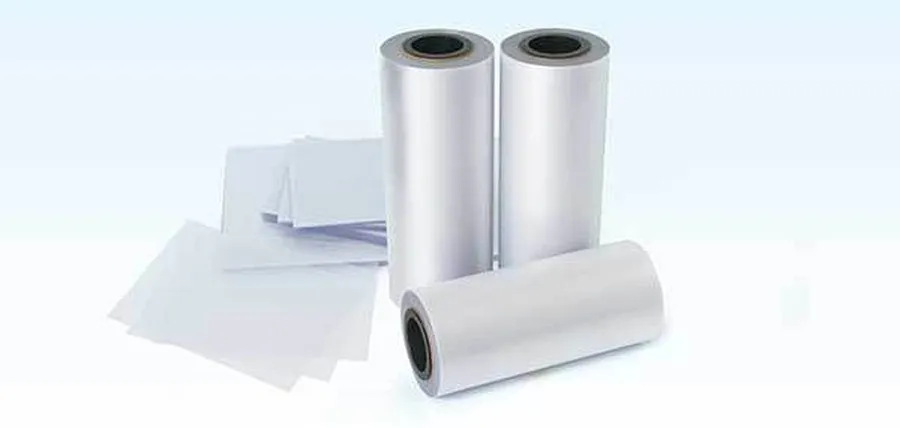
Support et adhésif doivent convenir au laminé. Convenez de l’épaisseur, du procédé et de la résistance d’assemblage. Les finitions brillantes, mates ou holographiques exigent un échantillon et une confirmation de disponibilité et de prix.
Points forts
Finition de surface
Comparez brillance, matité et toucher sur échantillons.
Assemblage
Testez pelage, abrasion et nettoyage sur le laminé complet.
Inspection visuelle
Un hologramme n’empêche pas le clonage électronique d’un badge.
Points à préciser dans la spécification
- Matériau
- Films overlay
- Couches illustratives
- Film de protection → Film de protection → Revêtement fonctionnel
- Dimensions
- Confirmez épaisseur et largeur du film ou de la feuille, tolérances du procédé et dimensions de l’ensemble fini.
- Documents du matériau
- Spécification du film, adhésif et laminage
- Justificatifs de performance
- Résultats de pelage, abrasion et résistance chimique avec conditions
Comment les couches s’assemblent
Ce schéma illustre une construction possible. Ordre, épaisseur relative et composants sont indicatifs ; la spécification fournisseur et l’échantillon approuvé définissent la commande.
Empilage illustratif ; confirmez les couches et dimensions réelles du projet.
- Film de protection Finition et couche d’usure ; vérifiez support et assemblage.
- Film de protection Finition et couche d’usure ; vérifiez support et assemblage.
- Revêtement fonctionnel Rôle et composition dépendent du procédé retenu.
Avant de valider la production
- Relevez serrure, encodeur, logiciel et configuration du badge ; testez l’échantillon fini sur le système installé.
- Approuvez graphisme, surface, dimensions et conditions de manipulation sur un échantillon représentatif.
- Confirmez minimum, frais d’échantillon et de production, expédition et délai dans le devis du projet.
Comparer les options associées
Questions sur le matériau
Que protège le film ?
Il ajoute une couche d’usure sur l’impression et influence sa tenue à la manipulation et au nettoyage. La protection dépend du film et de l’adhésion ; convenez d’essais d’abrasion et de produits de nettoyage.
L’hologramme empêche-t-il le clonage ?
Il apporte un effet optique pour inspection visuelle que l’impression ordinaire ne reproduit pas directement. Il n’empêche pas la copie électronique ; la sécurité de la puce et du système reste nécessaire.
Mat et toucher doux coûtent-ils le même prix ?
Disponibilité et coût dépendent du film, de la quantité et du procédé. Confirmez la finition dans le devis et approuvez un échantillon ; aucune gratuité générale n’est promise.
Comment choisir la température de laminage ?
Suivez les indications des fournisseurs de film, adhésif, noyau et encre, puis validez l’assemblage. Une température de ramollissement unique ne définit pas le procédé de tous les laminés.
Démarrez votre commande
Vous préparez votre prochaine commande de cartes-clés ?
Indiquez serrure et encodeur, quantité par visuel, fichier et destination. Confirmez options, minimum, frais d’échantillons et livraison dans le devis.