
Matériaux · ABS
Porte-clés en ABS et cartes composites
ABS et mélanges PVC-ABS peuvent servir aux badges rigides et porte-clés. Grade et géométrie déterminent les performances.
Comparez l’article fini face aux chocs, à l’usure, au nettoyage et au lecteur. Le nom ABS n’établit ni température de service universelle ni résistance garantie.
Points forts
Formats rigides
Examinez forme, fixation et dimensions.
Coloration dans la masse
Elle peut atténuer le contraste des rayures ; vérifiez l’échantillon.
Conditions d’usage
Définissez chocs, températures et produits de nettoyage.
Points à préciser dans la spécification
- Matériau
- ABS & composite
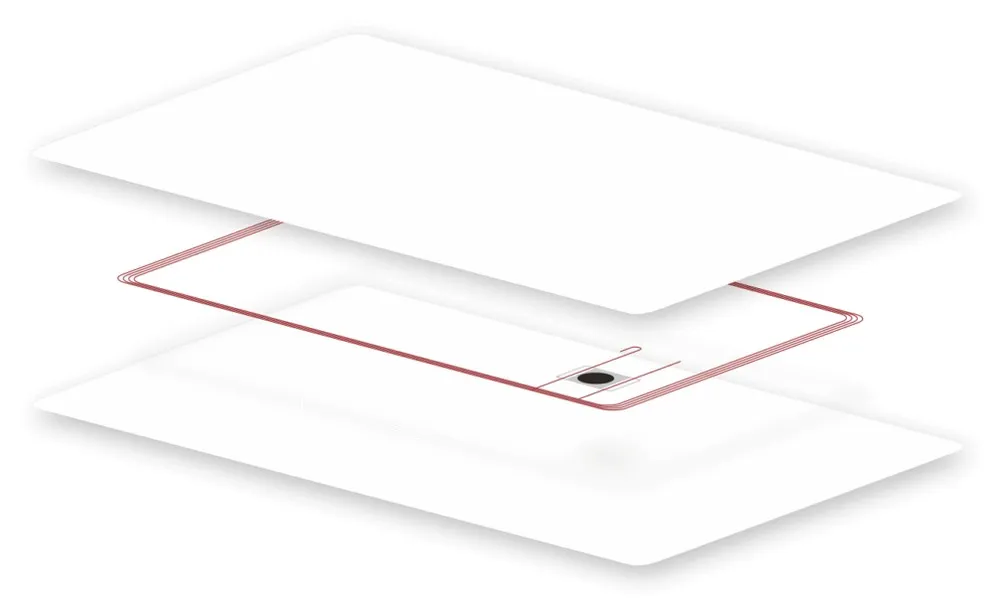
- Couches illustratives
- Noyau ou couche d’assemblage → Inlay RFID → Noyau ou couche d’assemblage
- Dimensions
- Confirmez format, épaisseur finale, tolérances et passage dans l’encodeur sur le plan et l’échantillon approuvés.
- Documents du matériau
- Fiche de résine ou mélange et plan final
- Justificatifs de performance
- Résultats de chocs, température et exposition chimique pour la structure
Comment les couches s’assemblent
Ce schéma illustre une construction possible. Ordre, épaisseur relative et composants sont indicatifs ; la spécification fournisseur et l’échantillon approuvé définissent la commande.
Empilage illustratif ; confirmez les couches et dimensions réelles du projet.
- Noyau ou couche d’assemblage Le rôle structurel ou adhésif dépend du laminé spécifié.
- Inlay RFID Puce et antenne ; testez l’ensemble avec le système d’accès.
- Noyau ou couche d’assemblage Le rôle structurel ou adhésif dépend du laminé spécifié.
Avant de valider la production
- Relevez serrure, encodeur, logiciel et configuration du badge ; testez l’échantillon fini sur le système installé.
- Approuvez graphisme, surface, dimensions et conditions de manipulation sur un échantillon représentatif.
- Confirmez minimum, frais d’échantillon et de production, expédition et délai dans le devis du projet.
Questions sur le matériau
Quand envisager l’ABS ?
Il peut être utile pour les boîtiers et porte-clés rigides moulés. Évaluez fixation, dimensions et chocs en plus de la résine, avec un échantillon de géométrie et d’assemblage finaux.
ABS et PVC-ABS sont-ils équivalents ?
Non. Le mélange possède sa propre composition et son comportement. Demandez la fiche du grade exact ; ne transférez pas automatiquement des valeurs d’ABS pur vers un mélange.
Quelle température d’usage indiquer ?
Convenez d’une limite basée sur le grade et les essais de l’article fini. Le ramollissement de la résine ne garantit pas les performances de puce, adhésif et boîtier sur cette plage.
La coloration dans la masse cache-t-elle toutes les rayures ?
Elle peut réduire le contraste, mais n’élimine ni rayures ni usure. Comparez texture, couleur et abrasion sur échantillons avant de fixer vos attentes.
Démarrez votre commande
Vous préparez votre prochaine commande de cartes-clés ?
Indiquez serrure et encodeur, quantité par visuel, fichier et destination. Confirmez options, minimum, frais d’échantillons et livraison dans le devis.