
Materiales · ABS
Llaveros de ABS y tarjetas de material compuesto
El ABS y las mezclas PVC-ABS pueden servir para credenciales rígidas y llaveros. El grado y la geometría determinan el desempeño.
Compare el artículo terminado frente a golpes, desgaste, limpieza y ajuste en el lector. El nombre ABS no establece una temperatura de servicio ni una resistencia universal.
Puntos clave
Formatos rígidos
Revise forma, fijación y dimensiones.
Color en masa
La pigmentación puede disimular contraste de arañazos; compruebe la muestra.
Condiciones de uso
Defina golpes, temperaturas y productos de limpieza.
Puntos para definir la especificación
- Material
- ABS y compuesto
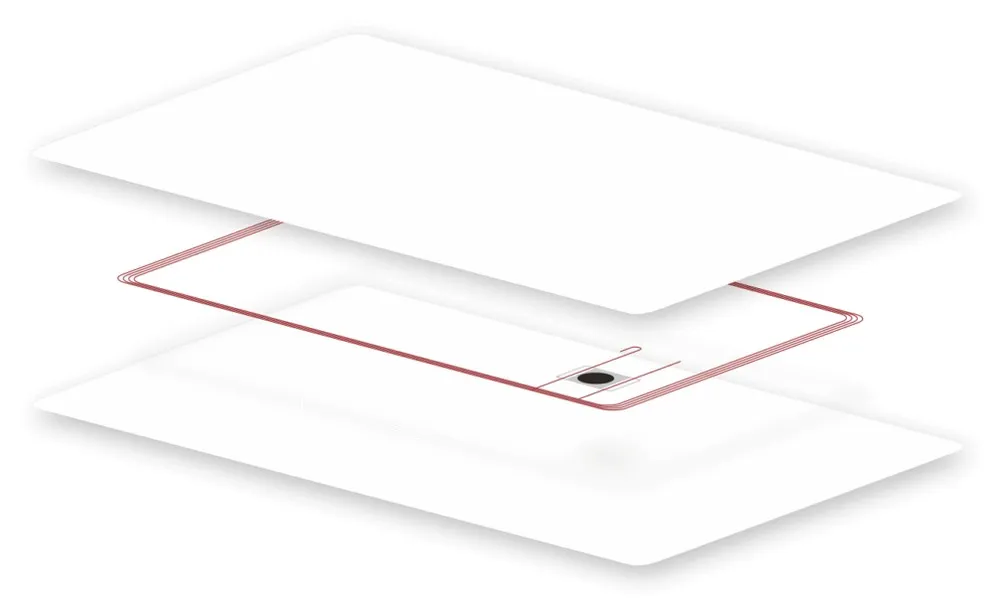
- Capas ilustrativas
- Núcleo o capa de unión → Inlay RFID → Núcleo o capa de unión
- Dimensiones
- Confirme formato, espesor final, tolerancias y paso por el codificador en el plano y la muestra aprobados.
- Documentación del material
- Ficha de la resina o mezcla y plano final
- Evidencia de desempeño
- Resultados de impacto, temperatura y exposición química de la estructura
Cómo se combinan las capas
El diagrama muestra una construcción posible. Orden, espesor relativo y componentes son ilustrativos; la especificación del proveedor y la muestra aprobada definen el pedido.
Esquema ilustrativo; confirme capas y dimensiones reales del proyecto.
- Núcleo o capa de unión La función estructural o adhesiva depende del laminado.
- Inlay RFID Chip y antena; pruebe el conjunto con el sistema de acceso.
- Núcleo o capa de unión La función estructural o adhesiva depende del laminado.
Antes de aprobar la producción
- Registre cerradura, codificador, software y configuración de credencial; pruebe la muestra final en el sistema instalado.
- Apruebe diseño, superficie, dimensiones y condiciones de manipulación con una muestra representativa.
- Confirme cantidad mínima, cargos de muestras y producción, envío y plazo en la oferta del proyecto.
Preguntas sobre el material
¿Cuándo conviene considerar ABS?
Puede ser útil para carcasas y llaveros rígidos moldeados. Evalúe fijación, dimensiones y golpes además de la resina, usando una muestra con la geometría y el montaje finales.
¿ABS y PVC-ABS son equivalentes?
No. La mezcla tiene composición y comportamiento propios. Solicite la ficha del grado exacto; no traslade automáticamente datos de ABS puro a una mezcla.
¿Qué temperatura de uso podemos indicar?
Acuerde un límite basado en el grado y ensayos del artículo completo. El reblandecimiento de la resina no garantiza el desempeño de chip, adhesivo y carcasa en ese intervalo.
¿El color en masa oculta todos los arañazos?
Puede reducir el contraste, pero no elimina arañazos ni desgaste. Compare textura, color y abrasión de las muestras antes de definir expectativas.
Inicie su pedido
¿Está preparando su próximo pedido de tarjetas?
Envíe datos de cerradura y codificador, cantidad por diseño, arte final y destino. Confirme opciones, mínimo, costes de muestras y entrega en el presupuesto.